Quotessence
Home / Quotes / Quote by Thomas Cogswell Upham

Quote by Thomas Cogswell Upham

Work

Religious Maxims, Having a Connection with the Doctrines and Practice of Holiness

This book explores the core tenets and practices associated with religious holiness, offering insights into the doctrines and behaviors that define this spiritual path. more

Author
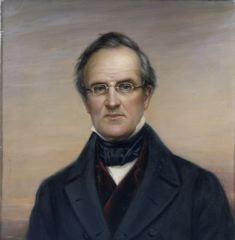
Thomas Cogswell Upham

Thomas Cogswell Upham was an American poet born on January 30, 1799, and died on April 2, 1872. He is known for his unique poetic style and profound emotional expression. more

You May Also Like

“As a slave one cannot undertake obligations without the consent of one's master. As a citizen one cannot undertake obligations unless the legal system of the State in which one holds citizenship permits one to do so. Neither a slave nor a citizen is a free person, although those who are held as slaves or citizens may well be free persons: it is just that their freedom is not respected.”

“I recall an incident involving the late George Stigler at a conference in Spain in the 1980s. Hearing that I had written a book on reason and natural law, Stigler started to ridicule reason, going so far as to say that there is as much reason in a monkey's antics as in any human act. At that point I asked him whether he was trying to tell me something about how he wrote his books; he gave me a blank stare and stormed out of the room.”

“There is a strong current in contemporary culture advocating ' holistic ' views as some sort of cure-all... Reductionism implies attention to a lower level while holistic implies attention to higher level. These are intertwined in any satisfactory description: and each entails some loss relative to our cognitive preferences, as well as some gain... there is no whole system without an interconnection of its parts and there is no whole system without an environment.”

“The emergence of a unified cognitive moment relies on the coordination of scattered mosaics of functionally specialized brain regions. Here we review the mechanisms of large-scale integration that counterbalance the distributed anatomical and functional organization of brain activity to enable the emergence of coherent behaviour and cognition. Although the mechanisms involved in large-scale integration are still largely unknown, we argue that the most plausible candidate is the formation of dynamic links mediated by synchrony over multiple frequency bands.”