“How clear, how lovely bright, How beautiful to sight Those beams of morning play; How heaven laughs out with glee Where, like a bird set free, Up from the eastern sea Soars the delightful day. To-day I shall be strong, No more shall yield to wrong, Shall squander life no more; Days lost, I know not how, I shall retrieve them now; Now I shall keep the vow I never kept before. Ensanguining the skies How heavily it dies Into the west away; Past touch and sight and sound Not further to be found, How hopeless under ground Falls the remorseful day.”
Quote by A. E. Housman
Work
Delphi Complete Works of A. E. Housman (Illustrated)
The book is a curated selection of A. E. Housman's literary contributions, including his renowned poetry and scholarly works, presented in a format that is both visually appealing and informative. It is an essential volume for students and enthusiasts of English literature and scholarly research. more
Author
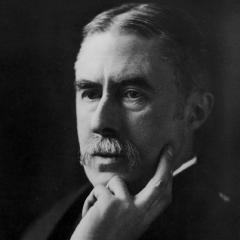
A. E. Housman
A. E. Housman, born on March 26, 1859, was a renowned British poet known for his profound emotions and classical style. His works, such as 'A Shropshire Lad', are celebrated for their depth and classical references. Housman's poetry has had a lasting impact on 20th-century British literature and remains widely read and studied today. more
You May Also Like
“I am not a saint or a cripple, I am not a wound; now I will see whether I am a coward.”
Source: Selected Poems: 1965-1975
Source: My Vocabulary Did this to Me: The Collected Poetry of Jack Spicer
Source: Selected poems
Source: The Abbess of Crewe
Source: The Sound and the Fury (Third International Edition) (Norton Critical Editions)
Source: Goethe's Faust
Source: The Complete Novels of Jane Austen