“To generate exuberant diversity in a city's streets and districts four conditions are indispensable: 1. The district, and indeed as many of its internal parts as possible, must serve more than one primary function; preferably more than two... 2. Most blocks must be short; that is, streets and opportunities to turn corners must be frequent. 3. The district must mingle buildings that vary in age and condition, including a good proportion of old ones so that they vary in the economic yield they must produce. This mingling must be fairly close-grained. 4. There must be a sufficiently dense concentration of people, for whatever purposes they may be there...”
Quote by Jane Jacobs
Work
The Death and Life of Great American Cities
This influential work challenges conventional urban planning theories of the 1950s and 1960s, particularly those advocating for large-scale clearance, superblocks, and strict separation of uses. The author draws on close observation of city streets and neighborhoods to argue that vibrant, safe, and economically diverse urban areas arise from dense, mixed-use environments with short blocks and a constant flow of pedestrians. The book critiques the principles of figures like Le Corbusier and Ebenezer Howard, as well as the policies of urban renewal that devastated many existing communities. Instead, it proposes four essential generators of urban diversity and emphasizes the importance of local knowledge, informal social networks, and the intricate ballet of street life in maintaining a healthy city. The work remains a foundational text in urban studies, planning, and sociology. more
Author
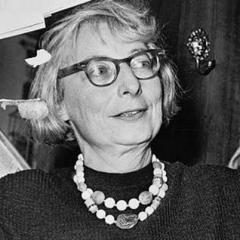
Jane Jacobs
Jane Jacobs, an American journalist and urban theorist, was born on May 4, 1916, and passed away on April 25, 2006. She is renowned for her profound insights into urban life and her unique perspectives on urban planning. Her book, 'The Death and Life of Great American Cities,' had a revolutionary impact on modern urban planning. more
You May Also Like
“Adolescent youths cry out for us to help them contextualize their life experiences.”
Source: The Wonder of Boys: What Parents, Mentors and Educators Can Do to Shape Boys into Exceptional Men
Source: Dopesick: Dealers, Doctors, and the Drug Company that Addicted America
Source: Pathologies of Power: Health, Human Rights, and the New War on the Poor
Source: منافي الرب
Source: Corona, Climate, Chronic Emergency: War Communism in the Twenty-First Century
Source: The Road To Purification: Hustlers, Hassles & Hash
Source: The Road To Purification: Hustlers, Hassles & Hash
Source: Henry V
“Rollup curiosities in backpack, go drive, explore.”
Source: You By You
Source: Out for Blood