Quotessence
Home / Quotes / Quote by Robert Frost

Quote by Robert Frost

“But yield who will to their separation, My object in living is to unite My avocation and my vocation As my two eyes make one in sight.”

Quote by Robert Frost

Author
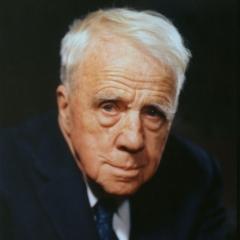
Robert Frost
Robert Frost

Robert Frost, born on March 26, 1874, and died on January 29, 1963, was one of the most renowned poets of the 20th century in the United States. He is known for his profound philosophy and unique poetic style, which often explores themes such as nature, life, and morality. more

You May Also Like

“Economists have always recognised that some kind of initial accumulation was necessary for the rise of capitalism. Adam Smith called this ‘previous accumulation’, and claimed that it came about because a few people worked really hard and saved their earnings– an idyllic tale that still gets repeated in economics textbooks. But historians see it as naïve. This was no innocent process of saving. It was a process of plunder.”

“The ethical autonomy the impartial spectator offers us is a deception that has the function of rendering us more profoundly sociable than we were when we were in a state of ethical childhood and dependency. Rousseau once famously remarked that while men were born free, everywhere they were in chains. In Smith’s view the chains were those of the imagination, chains that could be loosened by a common-sense, sceptical awareness of the processes by which the moral personality was formed, but never altogether thrown off. And while Smith’s account of the life of virtue lived under the direction of the impartial spectator might seem to be nothing more than a subtle deception to a Rousseaunian or a Christian, and while this fabric of deception was to trouble him at the end of his life, Smith was to argue that the satisfaction of being able to live sociably under the direction of the impartial spectator was enough for humankind, and enough to encourage the improvement of society and the progress of civilization from the self-evidently wretched condition in which it had hitherto existed.”

“Leadership is largely ignored by recent liberal theorists. I suspect that the very idea of leadership has a non-egalitarian and authoritarian quality to it, best left to those (inspired by Max Webber) with a fascination for charisma or revolution; or left to fascists or management consultants and organisational psychologists. But this neglect by liberal theorists comes at a cost. Institutions and procedures are run by imperfect human beings and without ongoing maintenance, care and investment they decay. While I do not claim that 'leadership' is a sufficient response to the challenges of institutional decay and renewal, it may well be a necessary one.”

“Good grief. Here is an eighteenth-century, middle class Scottish professor [Adam Smith] saying that morality is an accidental by-product of the way human beings adjust their behavior towards each other as they grow up; saying that morality is an emergent phenomenon that arises spontaneously among human beings in a relatively peaceful society; saying that goodness does not need to be taught, let alone associated with the superstitious belief that it would not exist but for the divine origin of an ancient Palestinian carpenter.”

“Of, course, Chinese economic developments forms the great background for the rise of research into British political economy of the eighteenth century. Chinese policymakers and academics are increasingly interested in economic growth and the nature of international competition and tensions between the different nations. Hume and Smith discussed these questions in the eighteenth century and were a source of guidance for Great Britain in that transformative period. China has been undergoing a massive transformation from a traditional society to a modern one, from an agricultural society to a commercial one, and needs a new kind of political economy and moral philosophy to underpin this. The Scottish thinkers, Hume, Smith and Ferguson and their contemporaries debated political and economic problems and also reflected on the most appropriate ethic for the emergence of commercial society. One of the most striking features of their advice wa that it did not lead to the sort of violent revolution often associated with the French Enlightenment philosophers. On the contrary, they managed to contribute to the development and progress of Great Britain without aligning themselves with revolutionary movements. It is this aspect of their thinking that makes them attractive to many in contemporary China.”

“The Adam Smith that we know today was shaped by his early life and education in Kirkcaldy and Glasgow. As a bright young man he was able to benefit from gifted teachers, to read widely, and to discuss what he read with the students he spent time with. Smith clearly loved the school, the university, and the clubs and societies in Glasgow and Eddinburgh. They shaped his thinking. But we should also remember that, for all his sociability, Smith also loved to be on his own. When it came time to write the Wealth of Nations he returned to his mother's home and to the solitude of Kirkcaldy. Here he was able to arrange his thoughts during long walks on the beach. It is no surprise that a major section of Book V of the Wealth of Nations ended up being about education. Smith's own education and experience as a teacher shaped his thinking and awareness of how important education is to society.”

“There is a story that George Stigler, one of the leading lights of the Chicago School of economists, gave a seminar at the University of St Andrews on Adam Smith. His opening words, "Adam Smith is alive and well, and living in Chicago," invited the heckle, "And how is the prisoner?" Given that as well as being a formidable historian of economics, Stigler was also a fabulist, the story may have got better in the telling. All the economists who have contributed to this volume have rejected the Chicago reading of Smith. Freeing Stigler's prisoner, they have shown that for Smith, it was impossible to separate economy and society. They have noted that where the Chicago reading emphasised his support for free enterprise and accepted the outcome of markets as being the best possible, Smith instead emphasised the importance of 'commercial society.”

“Today, Adam Smith is famous as the father of capitalism and an advocate of a central tenet of free market thought: that greed is supposedly good and it drives markets. This was an idea pushed by neoliberal economists, inspired by Friedrich Hayeck and Milton Friedman, who had no knowledge of the history of moral philosophy, or of Scotland. What they missed is that no gentleman of his time could ever espouse greed, least of all a professor of moral philosophy. Indeed, Adam Smith recognized greed as an economic driver, and saw it as necessary, but also realized that it was a problem for society. His work was not an espousal of greed, but rather a response to it. His work was an attempt to find a way to reign in commercial greed to support the agrarian order, which he believed to be inherently more productive than business.”

“...the idea that Smith can somehow be seen as representative of modern capitalism is a stretch. He was a man of his time, in the very particular society of oligarchic, 18th century Scotland. It was a world in which he thrived precisely by not fighting the status quo, but rather by making a proposal for harnessing greed, while keeping merchants in their social place and celebrating the ruling class of the time, and trying to envision a way in which it could play a part in a modernizing economy. In many ways, he got it right. While capitalism flourished in 18th century Scotland, the landed elite remained firmly in place and has managed to do so to this very day. In that aspect, Smith was quite visionary.”

“Reading The Wealth of Nations as an attack against lobbying from special interest groups and cronyism suggests that for Smith the violence and inefficiencies of rent seeking mercantilist policies cause harm and are unjust. For Smith, rent seeking and state capture by special interest groups is not only inefficient, but uses the (actual) "blood and treasure" of fellow citizens to enrich a few merchants under the false pretence of enriching the country. The Wealth of Nations can therefore be read as a moral condemnation of mercantilist policies: unjust policies are also inefficient policies.”