Quotessence
Home / Quotes / Quote by Friedrich August von Hayek

Quote by Friedrich August von Hayek

Author
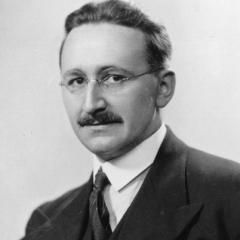
Friedrich August von Hayek

Friedrich August von Hayek, born on May 8, 1899, in Austria, and died on March 23, 1992, in the United Kingdom, was one of the most distinguished economists of the 20th century. He is renowned for his profound insights into the free market economy and his critical views on socialism. more

You May Also Like

“The discussions of every age are filled with the issues on which its leading schools of thought differ. But the general intellectual atmosphere of the time is always determined by the views on which the opposing schools agree. They become the unspoken presuppositions of all thought, and common and unquestioningly accepted foundations on which all discussion proceeds.”

“Every change in conditions will make necessary some change in the use of resources, in the direction and kind of human activities, in habits and practices. And each change in the actions of those affected in the first instance will require further adjustments that will gradually extend through the whole of society. Every change thus in a sense creates a "problemfor society, even though no single individual perceives it as such; it is gradually "solvedby the establishment of a new overall adjustment.”

“Country' and 'city' are very powerful words, and this is not surprising when we remember how much they seem to stand for in the experience of human communities. In English, 'country' is both a nation and a part of a 'land'; 'the country' can be the whole society or its rural area. In the long history of human settlements, this connection between the land from which directly or indirectly we all get our living and the achievements of human society has been deeply known.”

“On the country has gathered the idea of a natural way of life: of peace, innocence, and simple virtue. On the city has gathered the idea of an achieved centre of learning, communication, light. Powerful hostile associations have also developed: on the city as a place of noise, worldliness and ambition; on the country as a place of backwardness, ignorance, limitation. A contrast between country and city, as fundamental ways of life, reaches back into classical times.”