Quotessence
Home / Quotes / Quote by Philip Kitcher

Quote by Philip Kitcher

“Using the Adagietto of Mahler's Fifth is one of the touches of pure genius in Visconti's film (even though Mahlerians complain very loudly that the piece has been ruined), since it corresponds perfectly to Aschenbach's yearnings and to his circling walks around Venice.”

Quote by Philip Kitcher

Author
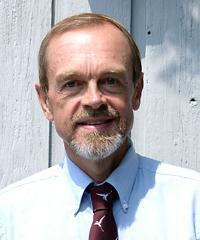
Philip Kitcher
Philip Kitcher

Philip Kitcher, born on February 20, 1947, is a philosopher, writer, and academic. His research interests are primarily in the fields of philosophy of science, epistemology, and moral philosophy. more

You May Also Like

“I found a deep kinship between Mahler's recurrent attempts to confront all sides of life and to affirm himself in the face of his own finitude, and Aschenbach's dedication to persevere in the literary evocation of beauty. Exploring this kinship led me to reflect on many of Mahler's songs and symphonies - and particularly his great masterpiece, Das Lied von der Erde. The end result was a way of reading Mann that I hadn't originally anticipated at all.”

“I intend Deaths in Venice to contribute both to literary criticism and to philosophy. But it's not "strict philosophy" in the sense of arguing for specific theses. As I remark, there's a style of philosophy - present in writers from Plato to Rawls - that invites readers to consider a certain class of phenomena in a new way. In the book, I associate this, in particular, with my good friend, the eminent philosopher of science, Nancy Cartwright, who practices it extremely skilfully.”

“I would like to undermine the stereotype of "strict philosophy." J.L. Austin remarked that, when philosophy is done well, it's all over by the bottom of the first page. I take him to have meant that the real work comes in setting up the problem with which you are dealing, and thus getting your reader to take particular things for granted.”

“Many of the greatest works of philosophy seem to me to be valuable not because of their arguments, but because they offer us perspectives that open up new possibilities. They show us how we might start in different places, and not buy into the assumptions tacitly made on the first pages of the philosophical works that have influenced us.”

“In elaborating how "philosophy by showing" works, and in defending the idea that literature and music can contribute to philosophical "showing", I am also doing something more standardly philosophical. But I view most of the book as an interweaving of philosophy and literary criticism. If that entails a broadening of a standard idea of philosophy, it's a broadening I'd like to see happen.”

“I'm a pluralist about perspectives on literature. There seem to me to be all sorts of illuminating ways of responding to major literary works, some of them paying considerable attention to context, others applying various theoretical ideas, yet others focusing on details of language, or linking the work to the author's life, or connecting it with other works.”

“Mann is widely recognized as a master of irony and ambiguity, yet it's remarkable how quickly people foreclose options he carefully leaves open. Lots of readers - including eminent critics - jump to conclusions: that Nietzsche's Birth of Tragedy is a central background text, that Aschenbach is an inferior writer, that he's never been attracted by pubescent male beauty before, that he dies of cholera.”