Quotessence
Home / Quotes / Quote by Wilkie Collins

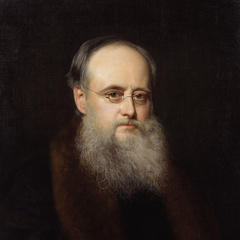
Quote by Wilkie Collins

“[...] we will leave this place, and go into other lodgings - you as the mistress; and I as the maid." "I should be found out, ma'am," interposed Louisa, trembling at the prospect before her. "I am not a lady." "And I am," said Magdalen bitterly. "Shall I tell you what a lady is? A lady is a woman who wears a silk gown, and has a sense of her own importance. I shall put the gown on your back, and the sense in your head.”

Quote by Wilkie Collins

Book:No Name

Work

No Name

Browse quotes and source details for this work. more

Author

Wilkie Collins
Wilkie Collins

Wilkie Collins, born on January 8, 1824, and died on September 23, 1889, was a renowned British novelist. He is best known for his suspense and detective novels, being one of the pioneers of this literary genre. His works, such as 'The Woman in White' and 'The Moonstone', are particularly famous. more

You May Also Like

“Let us have peace." But there was the black man looming like a dark ghost on the horizon. He was the child of force and greed, and the father of wealth and war. His labor was indispensable, and the loss of it would have cost many times the cost of the war. If the Negro has been silent, his very presence would have announced his plight. He was not silence. He was in usual evidence. He was writing petitions, making speeches, parading with returned soldiers, reciting his adventures as slave and freeman. Even dumb and still, he must be noticed. His poverty has to be relieved, and emancipation in his case had to mean poverty. If he had to work, he had to have land and tools. If his labor was in reality to be free labor, he had to have legal freedom and civil rights. His ignorance could only be removed by that very education which the law of the South had long denied him and the custom of the North had made exceedingly difficult. Thus civil status and legal freedom, food, clothes and tools, access to land and help to education, were the minimum demands of four million laborers, and these demands no man could ignore, Northerner or Southerner, Abolitionist or Copperhead, laborer or captain of industry. How did the nation face this paradox and dilemma?”

“Suddenly I caught sight of myself in a glass and saw what a figure of fun I looked. Hitherto I had always taken my appearance for granted; now I saw how inelegant it was, compared with theirs; and at the same time, for the first time, I was acutely aware of social inferiority. I felt utterly out of place among these smart rich people, and a misfit everywhere.”

“The estate stayed with me long after I moved elsewhere, partly in the form of a strange kind of vertigo when presented with opportunities and experiences I’d grown up assuming were far beyond my reach. I also felt its presence as early as my first term at university, when I got it into my head that everyone in the student union bar wanted to hear a version of my life story which crossed the “books on prescription” section of the library with Monty Python’s Four Yorkshiremen sketch.”