Quotessence
Home / Quotes / Quote by William Faulkner

Quote by William Faulkner

Work

As I Lay Dying

William Faulkner's 'As I Lay Dying' is a narrative told from multiple perspectives, focusing on the Bundren family's journey to bury their mother in a distant town. The novel delves into themes of identity, fate, and the American South, showcasing Faulkner's distinctive prose style and his exploration of the human condition. more
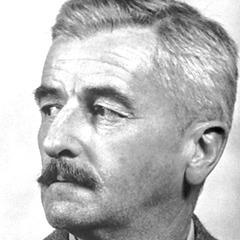
Author

William Faulkner
William Faulkner

William Faulkner, an American writer born on September 25, 1897, and died on July 6, 1962. Known for his unique narrative techniques and profound descriptions of Southern society and history, Faulkner is considered one of the great novelists of the 20th century. more

You May Also Like

“402Emotional position is part of it, but as an individual you are not your emotions, neither are you your intellect. These are things that you have . They're not things that you are . Therefore you have to start to become aware of the different requirements that human beings have, the different areas that they like to be satisfied in. Which means becoming aware of yourself. I mean, as a writer you're gonna have to understand pretty much the whole universe. But the best place to start is by understanding the inner universe. The entire universe – for one thing – only exists in your perceptions. That's all you're gonna see of it. To all practical intents and purposes this is purely some kind of lightshow that's being put on in the kind of neurons in our brain. The whole of reality. So. To understand the universe there's worse advice than that which was carved above the shrine of the Delphi oracle. Where it just said: “Know thyself”. Understand yourself. Know thyself is a magical goal, but like I say to me there is very little difference between magic and creative art in any sense – the laws of one apply perfectly well to the other.”

“Because of our selfishness and inclination toward personal comfort and convenience, we'd rather not have to deal with constant change and uncertainty. We have difficulty reconciling the goodness of God with the mystery of his ways.”

“Depend upon it you see but half. You see the evil, but you do not see the consolation. There will be little rubs and disappointments everywhere, and we are all apt to expect too much; but then if one scheme of happiness fails, human nature turns to another; if the first calculation is wrong, we make a second better; we find comfort somewhere- and those evil-minded observers, dearest Mary, who make much of a little, are more taken in and deceived than the parties themselves.”