Quotessence
Home / Quotes / Quote by Ernest Hemingway

Quote by Ernest Hemingway

“Dear Jesus, please get me out. Christ, please, please, please, Christ. If you only keep me from being killed I'll do anything you say. I believe in you and I'll tell everybody in the world that you are the only thing that matters. Please, please, dear Jesus' The shelling moved further up the line. We went to work on the trench and in the morning the sun came up and the day was hot and muggy and cheerful and quiet. The next night back at Mestre he did not tell the girl he went upstairs with at the Villa Rosa about Jesus. And he never told anybody.”

Quote by Ernest Hemingway

Work

In our time

In Our Time is a compilation of short stories that delve into the complexities of human life, society, and the passage of time. The stories within offer a diverse range of perspectives on the human condition, reflecting on themes such as love, loss, and the search for meaning in a rapidly changing world. more

Author

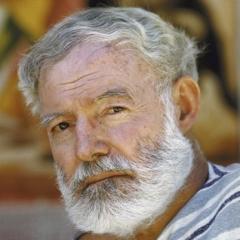
Ernest Hemingway
Ernest Hemingway

American author known for his concise and forceful writing style, as well as his profound insights into life. Hemingway's works cover a wide range of themes including war, adventure, and love, with notable titles such as 'The Old Man and the Sea' and 'A Farewell to Arms'. more

You May Also Like

“Love is the most divine experience on earth. Love proves that existence is not wthout meaning. Except for love there is no proof for the significance of life. If one has not experienced love one will feel meaninglessness in life. If one has not experience love one will feel an emptiness in life. One will feel at the mercy of unknown and material forces. That is how materialists look at life. Life is just a combination of matter. and love is a combination of hormones and chemical reactions in the body. But then there is no significance in life, and without significance in life one can only drag through life. Thereis no song, no dance in life. The existentialist philosophers says that life is meaningless, but they still go on clinging to life. They talk about anguish, fear, anxiety, despair, struggle and death. But nobody becomes convinced that life is really meaningless, because life is not meaningless. Life has intrinsic value, but its has to be discovered. We are intuitively aware that life is not meaningless. Love gives us proof of it. A lover has no doubts about life's  meaning. It is only through love that people have slowly discovered the ultimate meaning, which is God, the divine. It is only through love that people have discovered the whole science of meditation, because in loving moment the mind stops. When you are really in love, in those moments the past and the future disappears, and the present moment becomes all. That is what meditation is. Love gives you a glimpse of meditation. And through meditation a window opens into the existence of God. That is why love is the most divine phenomenon on earth. A seeker of truth has to be both a lover and a meditator, because both these qualities support each other. If you love, you will be able to meditate more deeply. If you meditate, you will be able to love more deeply. If you meditate, you will be able to love more totally. Love and meditation help each other. They support each other. The whole man knows both love and meditation. He lives on the earth, but he is part of the sky. And to be whole is to be holy.”

“We know no fear. It was cut from our souls at birth. We can feel it only as an absence, as an empty shadow cast by the light of annihilation. In the face of a future of atrocity I stand mute, numb to the only feeling that would make me human. But I remember what fear was: its cold pulse in my veins; its echo in my ears. I remember fear, and remember that I was once human. I look towards what must come to pass and I wish that I could meet it as my ancestors did, with fear. The future deserves that, it deserves fear.”

“The desire to experience new kinds of community led a number of thoughtful and idealistic people to reject the patterns of vocation, family life and religion with which they had grown up. Their attempt to establish new patterns of social bonding in uncontaminated rural retreats can be seen as a secular monasticism, but they often discovered that to abolish the boundaries of authority, family and property created a whole series of problems which they did not have the spiritual and personal resources to solve. At their best, such groups have opened up new horizons of discipleship, but they have often learned some hard lessons about the intractable sinfulness and selfishness of partly-redeemed human nature.”