Quotessence
Home / Quotes / Quote by Sylvia Nasar

Quote by Sylvia Nasar

“Many great scientists and philosophers, among them René Descartes, Ludwig Wittgenstein, Immanuel Kant, Thorstein Veblen, Isaac Newton, and Albert Einstein, have had similarly strange and solitary personalities.”

Quote by Sylvia Nasar

Work

A Beautiful Mind

A Beautiful Mind is a biography that delves into the life of John Nash, a brilliant mathematician whose work in game theory and economics earned him the Nobel Prize. The book details Nash's early life, his groundbreaking contributions to mathematics, and his personal battles with schizophrenia. It offers an intimate look at the challenges Nash faced and the resilience he displayed in overcoming them, providing a compelling narrative that intertwines the complexities of both his professional and personal life. more
Author

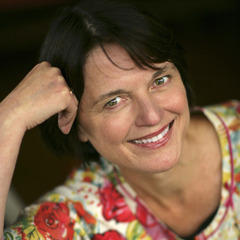
Sylvia Nasar
Sylvia Nasar

Sylvia Nasar is a distinguished American journalist and author, born on August 17, 1947. She has made substantial contributions to journalism through her insightful writing and reporting, covering a broad range of topics such as science, technology, and finance. Nasar has been recognized with numerous awards for her work. more

You May Also Like

“our child will learn A LOT about how to love themselves from the way you love yourself. Yes, they will learn parts of how to have self-worth from how you love them. But most of what they will do in the way of self-love will be what YOU DO in terms of LOVING YOURSELF”

“As a society, we denounce "delinquents," "hoodlums" and "hooligans," but the truth is that we routinely fail troubled kids before they fail us. More children die each year in the United States from abuse and neglect than from cancer. For every child who dies, thousands are injured, raped or brutally abused. We shrug as millions of children undergo trauma in ways that harm them and unravel our social fabric--and then we blame the kids when things go wrong.”

“Young children. Where are they looking when their eyes focus above our heads, or when they talk to “invisible friends”? The child senses things most adults have lost, and in the innocence of expression might describe what s/he perceives. More often than not, the parent or teacher of that child might pat him condescendingly on the head and tell him what a fun imagination he has, or things could become more severe and that child will be scolded for making things up. Soon the child will learn to ignore such nonsense, or at least not bother sharing it for fear of ridicule. And so we forget.”

“Hypnosis is a fascinating subject, and more common than we realize. How does it work? Essentially, when we relax our inner powers of discrimination, associated with our personal wills, and passively allow ideas and input into our subconscious mind, we are open to suggestions, which over time can be directed in specific ways that we call conditioning. The discriminating part of the mind is sometimes called the Gateway to the Unconscious. This gateway opens naturally and is most apparent, and useful, in the way children can quickly learn and adapt to their surroundings. This is an automatic occurrence and part of the learning process. This dynamic of “taking in” our surroundings is natural. It is fast and fluid and probably vital for the survival of our species to “learn” things rapidly. Our cultures, languages and civilizations are, to a great extent, passed on this way. Children are like sponges, we are told. We are delighted by this open and vital acceptance and curiosity of the world displayed by children. Interestingly enough, adults who maintain this open sense of wonder are labeled naive and gullible. I take delight in children, and encourage my clients to nurture their inner children.”