Quotessence
Home / Quotes / Quote by Charles Lee

Quote by Charles Lee

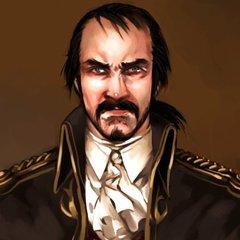
“It's simple. Mankind is a sorry excuse for living creatures. They are cruel, cold, merciless, selfish, heartless, wasteful, greedy, and destructive. But the list goes on. I can spend all night telling you what’s wrong with them, but why bother?”

Quote by Charles Lee

Work

The Way To Dawn

Browse quotes and source details for this work. more

Author

Charles Lee
Charles Lee

Charles Lee (1732–1782) was a prominent British-born American officer during the American Revolutionary War, later serving as a Continental Army general. Born into an aristocratic family in Wiltshire, England, Lee received an elite education and studied military theory in Europe. He served in the British Army for many years, participating in the Seven Years' War and accumulating extensive combat experience. When the Revolutionary War broke out, he abandoned his allegiance to the Crown and joined the American cause, becoming a close associate of George Washington. As a senior commander in the Continental Army, Lee played a crucial role in key battles such as the Battle of New York and the Battle of Morristown. His military style was characterized by rigor and a preference for defensive strategies, but his arrogance and strained relationship with Washington ultimately led to his capture at the Battle of Montauk Point in 1777, a turning point in the war. After his release, Lee's political career was marred by his alleged connections to French spies and his ongoing rivalry with Washington. Historically, Lee is a complex figure: while recognized as a revolutionary hero, his personality flaws often overshadow his contributions. His military writings, including translations and commentaries on European strategy, have influenced later military thought, and his life reflects the transatlantic identity of 18th-century American elites. more
You May Also Like

“Modern man has successfully razed the imaginative landscapes of primal peoples the whole world over. Kill the gods first, slaughter the sacred animals, rewrite the mythologies, and build roads through the holy places. Do all this and watch the people decline. Without souls, they soon die, leaving dead shells, zombie cultures, shambling aimlessly towards oblivion.”

“I have long been of the Opinion, says he, that the Fire was a vast Blessing and the Plague likewise; it gave us Occasion to understand the Secrets of Nature which otherwise might have overwhelm'd us. (I busied my self with the right Order of the Draughts, and said nothing.) With what Firmness of Mind, Sir Chris. went on, did the People see their City devoured, and I can still remember how after the Plague and the Fire the Chearfulnesse soon returned to them: Forgetfulnesse is the great Mystery of Time. I remember, I said as I took a Chair opposite to him, how the Mobb applauded the Flames. I remember how they sang and danced by the Corses during the Contagion: that was not Chearfulnesse but Phrenzy. And I remember, also, the Rage and the Dying - These were the Accidents of Fortune, Nick, from which we have learned so much in this Generation. It was said, sir, that the Plague and the Fire were no Accidents but Substance, that they were the Signes of the Beast withinne. And Sir Chris. laughed at this. At which point Nat put his Face in: Do you call, sirs? Would you care for a Dish of Tea or some Wine? Some Tea, some Tea, cried Sir Chris. for the Fire gives me a terrible Thirst. But no, no, he continued when Nat had left the Room, you cannot assign the Causes of Plague or Fire to Sin. It was the negligence of Men that provoked those Disasters and for Negligence there is a Cure; only Terrour is the Hindrance. Terrour, I said softly, is the Lodestone of our Art.”