Quotessence
Home / Quotes / Quote by Mary Wollstonecraft Shelley

Quote by Mary Wollstonecraft Shelley

“The sunset and the gentle moon, the blessed motion of the leaves and the murmuring of waters are all sweet physicians to a distempered mind. The soul is expanded and drinks in quiet, a lulling medicine – to me it was as the sight of the lovely water snakes to the bewitched mariner – in loving and blessing Nature I unawares, called down a blessing on my own soul.”

Quote by Mary Wollstonecraft Shelley

Author
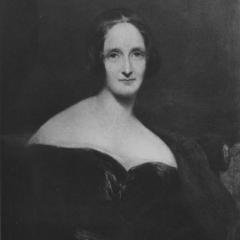
Mary Wollstonecraft Shelley

Mary Wollstonecraft Shelley was an English novelist best known for her famous work, 'Frankenstein'. Born on August 30, 1797, and passing away on February 1, 1851, she was an early female writer whose works explored themes such as women's rights, social inequalities, and scientific ethics. more

You May Also Like

“But this old theory - didn’t Plato think that something survived the decline, something inner not able to decay? The ancient dualism: body separated from soul. The body ending as Wendy did, and the soul - out of its nest the bird, flown elsewhere. Maybe so, he thought. To be reborn again, as the Tibetan Book of the Dead says. It really is true. Christ, I hope so. Because in that case we all can meet again. In, as in Winnie-the-Pooh, another part of the forest, where a boy and his bear will always be playing... a category, he thought, imperishable. Like all of us. We will all wind up with Pooh, in a clearer, more durable new place.”

“...I had the feeling that Gregorio was everywhere and nowhere, that he was a vaporous presence, as if he hadn't died altogether and was perhaps not outside of me, but inside of me, not in any tangible sense but not in a merely spiritual one either. We like to think that ghosts inhabit old houses and dark corners, but we too in our body and soul become these very things: an old house, a dark corner, a storehouse for the memories of the people who preceded us and whose rest we eventually decided to disturb.”

“Forgiveness is moot if not heartfelt. The only thing we must do is protect our God-given souls! We must find it in our own hearts to forgive the men of Molotschna ... and even if the men don't ask for it themselves and even if they claim their innocence all the way to their graves!" "So you believe that maintaining the condition of your own soul is more important than obeying God?" Mirika says, less calm now. "They are the same thing really," Ona says, steadily. "I believe that my soul, my essence, my intangible energy is the presence of God within me and that by bringing peace to my soul I am honouring God. If I can understand how these crimes may have occurred, I am able to forgive these men and I am almost able, certainly from a distance, to pity them... to love them. Love is good and better than retaliation.”