Quotessence
Home / Quotes / Quote by David G. Hartwell

Quote by David G. Hartwell

“Fantasy and science fiction are closely allied in publishing, since both categories posit worlds that are not reality. The SF editor is most often a fantasy editor as well. Yet the most useful view for the working editor is to consider fantasy as conservative and pastoral, and SF as radical, technological, urban. There is a spectrum of variations, especially considering that for at least the last half century, many of the same authors have written both, a legacy, again, of the pulp magazines, which published both in the early twentieth century, before the battle lines were clearly drawn.”

Quote by David G. Hartwell

Work

Editors on Editing: What Writers Need to Know About What Editors Do

Browse quotes and source details for this work. more

Author
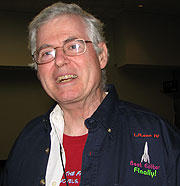
David G. Hartwell
David G. Hartwell

David G. Hartwell was an esteemed editor and science fiction critic. Born on July 10, 1941, and passing away on January 20, 2016, Hartwell was renowned for his profound understanding and extensive influence on science fiction literature. He edited numerous influential science fiction anthologies, including the 'Annual Best Science Fiction' series, which became a significant reference in the science fiction community. more

You May Also Like

“For me, and other ‘first timers’ [debut authors] I’ve spoken to, the primary concern is whether the story is good enough. With your first book there is no objective bench-mark you can judge it by. I felt very protective of the first draft; are people going to laugh when they read it or just shake their head? It sounds strange but the book was part of me. (Jon Gliddon interview on sevencircumstances.com)”

“編輯是全方位工作者,文字能力是基本要求,溝通協調是家常便飯,更重要的是優雅解決問題的能力、笑著面對挑戰的勇氣!/有能力的話就買書吧!買書是對作者、對編輯、對所有出版從業人員最大的支持/其實你可以幫任何一本書寫導讀,只要你找得到它特出的地方/這是一份失敗了檢討自己,成功了榮耀歸於他人的工作,如果想要肯定一本書,或是身為在幕後的編輯拍拍,最好的方式就是把書買回家/現代人,特別是出版從業人員,如果沒有自嘲和自娛的能力,要怎麼在這險惡的冰河時期,維持健全的心靈呢?”

“Neither did the biblio...worthies themselves allege much tangible objection against the work offered to their acceptance,--which they yet seemed unanimous in rejecting; excepting that there was something new and queer about "the thing" they did not like! They could not say exactly what it was--but it was not written in the way Lady This, That, or the Other (it was the time of the supremacy of fashionable slip-slop) "wrote things!”

“Anatomy of Typos (Sonnet) It took me a 100 books to realize this, typos are not a stain upon literature, typos are ornament of literature, sweet reminders of human endeavor. It's great to have literature without typos, like it's great to have a life without regrets. But in actuality, only the dead have no regrets, only the uncreative make no typographical mistakes. There are typos that are grievous, hence, need correcting, but most typos are harmless. Repulsed by typos means repulsed by literature, repulsed by regrets means repulsed by existence. Typos are the ornament of literature, regrets are the ornament of life. To make peace with regrets is the beginning of life, to make peace with typos is to empower literary light.”

“In a world where we spend ever more of our time staring at screens, blocking out even our most intimate and proximate human contacts, public institutions with open-door policies compel us to pay close attention to people nearby. After all, places like libraries are saturated with strangers, people whose bodies are different, whose styles are different, who make different sounds, speak different languages, give off different, sometimes noxious, smells. Spending time in public social infrastructures requires learning to deal with these differences in a civil manner.”