“Much is due to those who first broke the way to knowledge, and left only to their successors the task of smoothing it.”
Quote by Samuel Johnson
Work
Journey to the Hebrides: A Journey to the Western Islands of Scotland & The Journal of a Tour to the Hebrides
The book offers a comprehensive account of a journey through the Hebrides, a group of islands off the west coast of Scotland. It includes detailed observations of the natural beauty, local customs, and historical sites encountered during the trip. more
Author
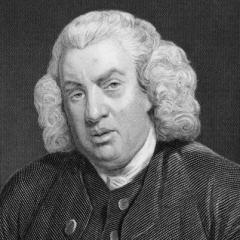
Samuel Johnson
Samuel Johnson was an English writer, poet, and lexicographer, renowned for his comprehensive English dictionary, 'A Dictionary of the English Language', published in 1755. His distinctive writing style and wit have cemented his place as a significant figure in the history of English literature. more
You May Also Like
Source: The Works of Samuel Johnson, LL. D.: Lives of the poets
Source: The Beauties of Samuel Johnson, LL.D.: Consisting of Maxims and Observations, Moral, Critical, and Miscellaneous, to which are Now Added, Biographical Anecdotes of the Doctor, Selected from the Late Productions of Mrs. Piozzi, Mr. Boswell, ...
Source: The Rambler: In Four Volumes..
Source: The Life and Writings of Samuel Johnson...
Source: A Grammar of the Italian Language: With a Copious Praxis of Moral Sentences. To which is Added an English Grammar for the Use of the Italians
Source: The Works of Samuel Johnson, LL.D.: With An Essay on His Life and Genius
Source: The Works of Samuel Johnson, LL.D.: With An Essay on His Life and Genius
Source: Dr. Johnson's Table-talk: Containing Aphorisms on Literature, Life, and Manners, with Anecdotes of Distinguished Persons, Selected and Arranged from Mr. Boswell's Life of Johnson