Quotessence
Home / Quotes / Quote by Daniel Pinchbeck

Quote by Daniel Pinchbeck

“Our normal human tendencies are distraction and dissipation. We begin one task, then get seduced by some other option, and lose our focus. We drift away from what is difficult and we know to be true, to what is comfortable and socially condoned.”

Quote by Daniel Pinchbeck

Work

The 2012 Collection

This collection brings together a diverse range of literary contributions from various authors, showcasing the literary trends and styles prevalent in that year. more

Author

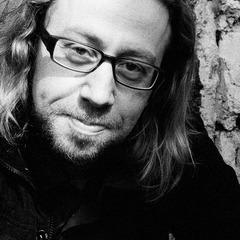
Daniel Pinchbeck
Daniel Pinchbeck

Daniel Pinchbeck, born on June 15, 1966, is an American author whose work spans across cultural criticism, spiritual exploration, and sustainability. He is known for his research on psychedelic drugs and spiritual practices, with his book 'Breaking Open the Head' detailing his personal experiences with psychedelic substances. more

You May Also Like

“All work, the genuine work which we must achieve, is that which is most difficult and painful: the work on ourselves. If we do not freely take upon ourselves this pre-acceptance of the pain and torment, they will be visited upon us in an otherwise necessary individual and universal collapse. Anyone disassociated from his origin and his spiritually sensed task acts against origin. Anyone who acts against it has neither a today nor a tomorrow.”

“To think that practice and realization are not one is a heretical view. In the Buddha Dharma, practice and realization are identical. Because one's present practice is practice in realization, one's initial negotiating of the Way in itself is the whole of original realization. Thus, even while directed to practice, one is told not to anticipate a realization apart from practice, because practice points directly to original realization.”

“The gigantic catastrophes that threaten us today are not elemental happenings of a physical or biological order, but psychic events. To a quite terrifying degree we are threatened by wars and revolutions which are nothing other than psychic epidemics. At any moment several million human beings may be smitten with a new madness, and then we shall have another world war or devastating revolution. Instead of being at the mercy of wild beasts, earthquakes, landslides, and inundations, modern man is battered by the elemental forces of his own psyche.”

“A poet once said, "The whole universe is in a glass of wine." We will probably never know in what sense he meant that, for poets do not write to be understood... How vivid is the claret, pressing its existence into the consciousness that watches it! If our small minds, for some convenience, divide this glass of wine, this universe, into parts - physics, biology, geology, astronomy, psychology, and so on - remember that nature does not know it! So let us put it all back together, not forgetting ultimately what it is for. Let it give us one more final pleasure: drink it and forget it all!”

“I do not think of God theistically, that is, as a being, supernatural in power, who dwells beyond the limits of my world. I rather experience God as the source of life willing me to live fully, the source of love calling me to love wastefully and to borrow a phrase from the theologian, Paul Tillich, as the Ground of being, calling me to be all that I can be.”

“For money you can have everything it is said. No, that is not true. You can buy food, but not appetite; medicine, but not health; soft beds, but not sleep; knowledge but not intelligence; glitter, but not comfort; fun, but not pleasure; acquaintances, but not friendship; servants, but not faithfulness; grey hair, but not honor; quiet days, but not peace. The shell of all things you can get for money. But not the kernel. That cannot be had for money.”

“Imitation is often a shortcut to a solution. We copy when we lack the inclination, the ability or the time to work out an independent solution. People in a hurry will imitate more readily than people at leisure. Hustling thus tends to produce uniformity. And in the deliberate fusing of individuals into a compact group, incessant action will play a considerable role.”