Quotessence
Home / Quotes / Quote by Aristotle

Quote by Aristotle

Work

Ethics: The Nicomachean Ethics

Written by Aristotle, this work delves into the philosophical inquiry of ethics, focusing on the concept of virtue and its role in human flourishing. It is a comprehensive examination of moral principles and the pursuit of eudaimonia, or human excellence. more

Author
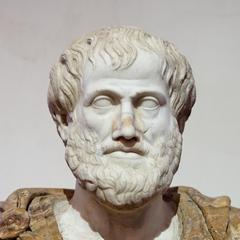
Aristotle
Aristotle

Aristotle, a renowned Greek philosopher, is one of the founders of Western philosophy. His thoughts covered a wide range of fields, including ethics, logic, politics, and had a profound impact on the world. more

You May Also Like

“We attach our feelings to the moment when we were hurt, endowing it with immortality. And we let it assault us every time it comes to mind. It travels with us, sleeps with us, hovers over us while we make love, and broods over us while we die. Our hate does not even have the decency to die when those we hate die-for it is a parasite sucking OUR blood, not theirs. There is only one remedy for it. [forgiveness]”

“If we say that monsters [people who do terrible evil] are beyond forgiving, we give them a power they should never have...they are given the power to keep their evil alive in the hearts of those who suffered most. We give them power to condemn their victims to live forever with the hurting memory of their painful pasts. We give the monsters the last word.”

“With a little time, and a little more insight, we begin to see both ourselves and our enemies in humbler profiles. We are not really as innocent as we felt when we were first hurt. And we do not usually have a gigantic monster to forgive; we have a weak, needy, and somewhat stupid human being. When you see your enemy and yourself in the weakness and silliness of the humanity you share, you will make the miracle of forgiving a little easier.”

“The problem with revenge is that it never gets what it wants; it never evens the score. Fairness never comes. The chain reaction set off by every act of vengeance always takes its unhindered course. It ties both the injured and the injurer to an escalator of pain...Why do family feuds go on and on?...the reason is simple: no two people, no two families, ever weigh pain on the same scale.”