“I never thought before, that there was a woman in the world who could affect me so much by saying so little. But don't be hard in your construction of me. You don't know what my state of mind towards you is. You don't know how you haunt and bewilder me. You don't know how the cursed carelessness that is over-officious in helping me at every other turning of my life WON'T help me here. You have struck it dead, I think, and I sometimes wish you had struck me dead along with it.”
Quote by Charles Dickens
Work
Delphi Complete Works of Charles Dickens (Illustrated)
This volume gathers the entirety of Charles Dickens's literary output, encompassing his famous novels, short stories, and miscellaneous writings. Dickens stands as one of the most influential English novelists of the Victorian period, known for his vivid characterizations, social commentary, and narrative mastery. The collection includes illustrated content and represents a complete compilation of his written works, offering readers the opportunity to explore the full scope of Dickens's literary legacy in a single edition. more
Author
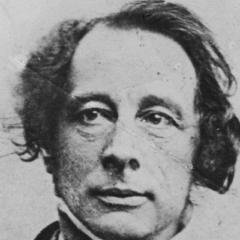
Charles Dickens
Charles Dickens, a British writer born on February 7, 1812, and died on June 9, 1870, is one of the greatest novelists of the 19th century. Known for his profound social criticism and vivid narrative style, Dickens' works extensively cover social reality, revealing various issues in the British society of the time. more
You May Also Like
“Children should be allowed to be children and not be sold.”
Source: My Father's Tears: And Other Stories
Source: Anne of Green Gables
Source: The Hours: A Novel
Source: The essential Dracula: a completely illustrated & annotated edition of Bram Stoker's classic novel
Source: The Princess Bride: An Illustrated Edition of S. Morgenstern's Classic Tale of True Love and High Adventure
“The fact was, I didn't know if I was built for happy endings.”
“My shoes are clean from walking in the rain.”
Source: Book of Haikus