“It is not certain that everything is uncertain.”
Quote by Blaise Pascal
Work
The Thoughts on religion, and evidences of Christianity, of Pascal; tr., with intr., notes, etc., by G. Pearce
This volume presents a translation of Blaise Pascal's writings on religious belief and the rational grounds for Christianity, as prepared by translator G. Pearce. The work includes an introductory essay and explanatory notes that contextualize Pascal's arguments. Pascal's original text, often known as the Pensées, is a collection of fragments and meditations that explore the human condition, the nature of faith, and the evidence for Christian revelation. The translation aims to make these philosophical and theological insights accessible to an English-speaking audience, while the supplementary material by Pearce provides guidance on the historical and intellectual background of Pascal's thought. more
Author
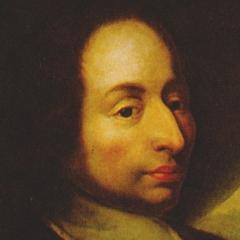
Blaise Pascal
Blaise Pascal was a French mathematician, physicist, philosopher, and theologian. He was born on June 19, 1623, and died on August 19, 1662. Pascal's contributions to mathematics were particularly significant, with groundbreaking work in probability theory, analytical geometry, and early calculus. more
You May Also Like
Source: A Treatise on Human Nature: Being an Attempt to Introduce the Experimental Method of Reasoning Into Moral Subjects; and Dialogues Concerning Natural Religion