“Nothing is more dreadful than a husband who keeps telling you everything he thinks, and always wants to know what you think.”
Quote by George Bernard Shaw
Work
The Collected Works of George Bernard Shaw: Plays, Novels, Articles, Lectures, Letters and Essays: Pygmalion, Mrs. Warren’s Profession, Candida, Arms and The Man, Man and Superman, Caesar and Cleopatra, Androcles And The Lion, The New York Times Articles on War, Memories of Oscar Wilde and more
The Collected Works of George Bernard Shaw is a seminal compilation that brings together a vast array of the playwright's writings. It encompasses his most celebrated plays, including Pygmalion, Mrs. Warren’s Profession, and Arms and The Man, which have left a lasting impact on theater and literature. The collection also includes Shaw's novels, articles, lectures, letters, and essays, providing insight into his diverse intellectual pursuits. Notable among these are his reflections on Oscar Wilde in 'Memories of Oscar Wilde' and his commentary on the war in 'The New York Times Articles on War'. This comprehensive volume is essential for anyone interested in the works of George Bernard Shaw and the evolution of modern drama and thought. more
Author
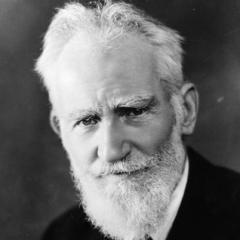
George Bernard Shaw
George Bernard Shaw (July 26, 1856 - November 2, 1950) was an Irish-British playwright, critic, and socialist. He is renowned for his satirical and witty dramatic works. more
You May Also Like
“I don't believe in morality . I'm a disciple of Bernard Shaw.”
Source: George Bernard Shaw: The Collected Plays (Illustrated): 60 plays including Caesar and Cleopatra, Pygmalion, Saint Joan, The Apple Cart, Cymbeline, Androcles And The Lion, The Man Of Destiny, The Inca Of Perusalem and Macbeth Skit
“I aint such a mug as to put up my children to all I know myself.”
Source: Pygmalion
Source: The Collected Works of George Bernard Shaw: Plays, Novels, Articles, Letters and Essays: Pygmalion, Mrs. Warren’s Profession, Candida, Arms and The Man, Man and Superman, Caesar and Cleopatra, Androcles And The Lion, The New York Times Articles on War, Memories of Oscar Wilde and more
Source: Nelly Sachs, Jean-Paul Sartre, George Bernard Shaw, Frans Eemil Sillanpää, René Sully-Prudhomme
“Conceive. That is the word that means both the beginning in imagination and the end in creation.”
Source: George Bernard Shaw: The Collected Plays (Illustrated): 60 plays including Caesar and Cleopatra, Pygmalion, Saint Joan, The Apple Cart, Cymbeline, Androcles And The Lion, The Man Of Destiny, The Inca Of Perusalem and Macbeth Skit
Source: The Collected Plays of George Bernard Shaw (Illustrated): Including Renowned Titles like Pygmalion, Mrs. Warren’s Profession, Candida, Arms and The Man, Man and Superman, The Inca Of Perusalem, Macbeth Skit, Caesar and Cleopatra, Androcles And The Lion