Quotessence
Home / Quotes / Quote by Otto Weininger

Quote by Otto Weininger

Work

Sex & Character

This book delves into the intricate connections between sexual behaviors, preferences, and individual characteristics, offering insights into the complex interplay between the two. more
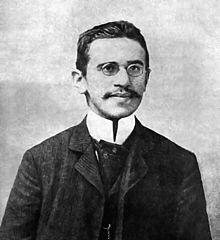
Author

Otto Weininger
Otto Weininger

Otto Weininger was an Austrian philosopher born on April 3, 1880, and died on October 4, 1903. His thoughts mainly revolve around gender, aesthetics, and ethics, and have had a profound impact on philosophy and psychology in the following years. more

You May Also Like

“As the mental endowment of a man varies with the organisation of his accumulated experiences, the better endowed he is, the more readily will he be able to remember his whole past, everything that he has ever thought or heard, seen or done, perceived or felt, the more completely in fact will he be able to reproduce his whole life. Universal remembrance of all its experiences, therefore, is the surest, most general, and most easily proved mark of a genius.”

“There is, moreover, very little sense in preventing young people from giving expression to their ideas on the pretext that they have less experience than have older persons. There are many who may live a thousand years without encountering experience of any value. It could only be in a society of persons equally gifted that such an idea could have any meaning.”

“The psychical condition of men's minds may be compared with a set of bells close together, and so arranged that in the ordinary man a bell rings only when one beside it sounds, and the vibration lasts only a moment. In the genius, when a bell sounds it vibrates so strongly that it sets in action the whole series, and remains in action throughout life. The latter kind of movement often gives rise to extraordinary conditions and absurd impulses, that may last for weeks together and that form the basis of the supposed kinship of genius with insanity.”

“With ordinary men the moments which are united in a close continuity out of the original discrete multiplicity are very few, and the course of their lives resembles a little brook, whereas with the genius it is more like a mighty river into which all the little rivulets flow from afar; that is to say, the universal comprehension of genius vibrates to no experience in which all the individual moments have not been gathered up and stored.”