Quotessence
Home / Quotes / Quote by Dana Goldstein

Quote by Dana Goldstein

“If you're afraid to talk to the other adults in your school it is definitely throughout history the hallmark of a failing school. When I was writing about the teachers' strike in New York City in 1968, the middle school where events triggered that strike was a place where teachers were known to hide in their classrooms.”

Quote by Dana Goldstein

Author
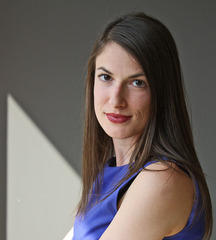
Dana Goldstein
Dana Goldstein

Dana Goldstein is an American journalist and author specializing in education, social policy, and public affairs. She writes for The New York Times, The Atlantic, and other major outlets, known for her in-depth reporting on education issues. Her book 'The Teacher Wars: A History of America's Most Embattled Profession' explores the evolution and controversies of teaching in the U.S. Goldstein's work focuses on educational inequality, teacher policy, and school reform, aiming to illuminate complex issues in the education system. She resides in Brooklyn, New York, continuing her writing and reporting. more

You May Also Like

“There's this great fashion among writers, especially those who follow the transnational conservatives like V.S. Naipaul, to disavow one's place in the world as a sort of box that has sprung you but is only worthy of your scorn, because it once contained you. And I've been tempted to say foolish things, like "I am an American writer" or "I belong nowhere," but the truth is I'm perfectly proud of identifying as an Indian writer, even if that might hurt my bottom line.”

“We're at an interesting phase of Asian and Asian-American writing, where we might succeed in having readers look at us as creative individuals who write with fury and fire about the world, and in new ways, without having them say things like "I read a really good Indian book," or "That Malaysian fellow writes very well." So I hope by identifying as Indian I can get people who don't usually read "ethnic" or "Indian" literature to read that literature and enjoy it.”

“It's rare that you get to read, let alone teach, an arbitrary canon of your choosing in a tight time setting, and I tore through a fairly wide range of Indian writers, some contemporary - like Arundhati Roy and Salman Rushdie - and others older, like R.K. Narayan. And I think what happened at that stage was that I was forced to take a position in my own writing style that was more fixed, as opposed to reading a book at a time and defining myself in opposition to or in awe of it.”