Quotessence
Home / Quotes / Quote by Friedrich Nietzsche

Quote by Friedrich Nietzsche

“The view that honesty is something, and even a virtue, belongs, it is true, to those private opinions which are forbidden in this age of public opinions.”

Quote by Friedrich Nietzsche

Author
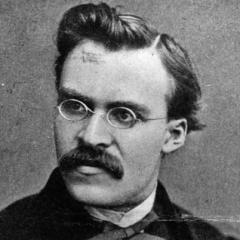
Friedrich Nietzsche
Friedrich Nietzsche

Friedrich Nietzsche was a German philosopher, cultural critic, poet, and writer whose works have had a profound impact on subsequent philosophy, literature, and thought. His ideas revolve around concepts such as the 'will to power', the 'Übermensch', and the 'eternal recurrence'. more

You May Also Like

“All the excesses, all the violence, and all the vanity of great men, come from the fact that they know not what they are: it being difficult for those who regard themselves at heart as equal with all men... For this it is necessary for one to forget himself, and to believe that he has some real excellence above them, in which consists this illusion that I am endeavoring to discover to you.”

“All who say the same things do not possess them in the same manner; and hence the incomparable author of the Art of Conversation pauses with so much care to make it understood that we must not judge of the capacity of a man by the excellence of a happy remark that we heard him make. Let us penetrate, says he, the mind from which it proceeds. It will oftenest be seen that he will be made to disavow it on the spot, and will be drawn very far from this better thought in which he does not believe, to plunge himself into another, quite base and ridiculous.”

“I would inquire of reasonable persons whether this principle: Matter is naturally wholly incapable of thought, and this other: I think, therefore I am, are in fact the same in the mind of Descartes, and in that of St. Augustine, who said the same thing twelve hundred years before.”

“In order to enter into a real knowledge of your condition, consider it in this image: A man was cast by a tempest upon an unknown island, the inhabitants of which were in trouble to find their king, who was lost; and having a strong resemblance both in form and face to this king, he was taken for him, and acknowledged in this capacity by all the people.”