“There is probably no one, however rigid his virtue, who is not liable to find himself, by the complexity of circumstances, living at close quarters with the very vice which he himself has been most outspoken in condemning -- without altogether recognizing it beneath the disguise of ambiguous behavior which it assumes in his presence.”
Quote by Marcel Proust
Work
In Search of Lost Time: Swann's way
This novel is the first volume of the seven-part series 'In Search of Lost Time' by French author Marcel Proust. It is renowned for its rich, introspective narrative and its exploration of the author's own life experiences. The story follows the protagonist, Charles Swann, as he navigates the Parisian social scene of the late 19th century, reflecting on his past and present relationships, and the nature of time and memory. more
Author
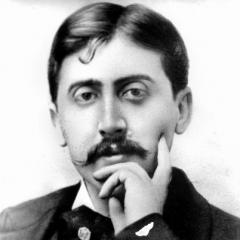
Marcel Proust
Marcel Proust was a French novelist renowned for his magnum opus, 'In Search of Lost Time'. This novel is considered a classic of 20th-century literature, known for its intricate psychological portrayals and profound exploration of memory. more
You May Also Like
Source: In Search Of Lost Time, Vol 2: Within a Budding Grove
Source: In the Shadow of Young Girls in Flower: In Search of Lost Time
Source: In Search of Lost Time Volume III The Guermantes Way
Source: Remembrance of Things Past
Source: In Search of Lost Time, Volume III: The Guermantes Way
Source: In Search of Lost Time, Volume IV: Sodom and Gomorrah (A Modern Library E-Book)
Source: In Search of Lost Time: Within a budding grove
Source: In Search of Lost Time, Volume II: Within a Budding Grove (A Modern Library E-Book)
Source: Swann's Way
Source: In Search of Lost Time, Volume II: Within a Budding Grove (A Modern Library E-Book)