Quotessence
Home / Quotes / Quote by Leroy Chiao

Quote by Leroy Chiao

“One of the biggest concerns about going out beyond lower Earth orbit is the radiation. We find that exercise seems to counteract a lot of the negative effects of space flight, like bone loss and muscle atrophy and cardiovascular systems issues. We exercise two hours a day on the station, which is a huge hit out of your day. It's great for staying in shape, but you know, it cuts into the productivity of the crew and if you look at how expensive it is to get a crew into space, if we can keep them healthy and have them exercise, but spend less time doing it, we can get more done.”

Quote by Leroy Chiao

Author
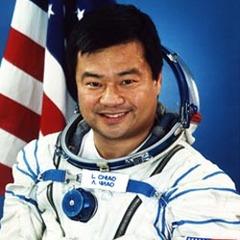
Leroy Chiao
Leroy Chiao

Leroy Chiao is an American engineer born on August 28, 1960. He is renowned for his exceptional contributions to the field of space exploration, serving as an astronaut for the National Aeronautics and Space Administration (NASA) and participating in multiple space missions. more

You May Also Like

“Exercise is very important, first of all if you think about it, especially in a long flight like a six month space flight and on the ISS. If you didn't exercise and used the analogy on earth, it would be like laying in bed. So, just imagine laying in bed for several months, and even just trying to get up and walk, you probably wouldn't be able to. But if you got up and you exercised two hours a day, you'd probably be okay, and that's the same in space.”

“We were doing something called telemedicine, where we were using the ultrasound. One interesting application of this ultrasound is the possibility that you could possibly use it to measure critical bone areas during a long space mission and track if you're losing bone in these areas. On Earth, when they check you for bone loss, you get in this big machine. It's the size of a room and it's got a platform with an x-ray that scans your whole body and in critical areas and it takes a while and it just wouldn't be practical to have a machine like that in space.”

“The ultrasound that has application not only in space for a long mission or for a mission to the Moon or Mars, but also in remote areas on the Earth. Not even just - I'm not even talking about expeditions like to the Antarctic, but just a remote area, a small town somewhere. The local doctor is not going to know everything, and so if that person can link in with a diagnostic ultrasound to the hospital in New York City through the internet, then they can do a very quick diagnosis of something that's wrong with someone that's in this remote area.”

“We have self-assessment tools, computer-based tools to see how we are performing mentally in outer space and there's some also very interesting technology and work that's being funded by NRSBI to look at facial recognition to look at your patterns to see if you're experiencing stress or fatigue. It's a kind of thing that I think will gain acceptance with gradually. But it probably has more to immediate application in things like homeland security, and looking at facial recognition of people going through airports and things like that to see who's under stress.”

“The training kicked in and we quickly went through our emergency procedures, I took manual control and I got the spacecraft under control and stopped about 50 meters from the space station. So, the net effect of the failure was that we were actually turning and speeding up towards the space station when we should have been slowing down, so it was quite a dangerous situation. But we got manual control, performed the first manual docking to the station at night. The training pays off. It was just automatic. We had our books out already, we went right to the right procedures and executed them.”

“The most important thing about an astronaut is you have to take for a given a person's done pretty well in school, has the intelligence and all of that to learn new systems and new things. But after that, the most important thing I think is being able to get along with others. Flexibility and teamwork, those issues because as we fly longer and longer in space, those are really important factors, even on short shuttle missions, those are important factors, to put a crew together that can work together effectively as a team, that can get along.”

“The Russians have been flying long duration crews since the early '70's. And in the early days, they've ended at least two missions early because of conflicts within the crew. So, they learned early on the importance of studying this and making sure you put the right crew together. Since we began our work together on the International Space station with the Russians in the early 2000's, NASA has started to learn the importance of this kind of work. And so, I think it's important work and we are not fully onboard and recognize it as important.”

“I remember getting advice like, "Oh, do what interests you. Don't worry about tomorrow, live for today," kind of thing. And to a degree, you've got to do that, you've got to follow your passions. You've got to follow your dreams, but you also have to have a plan. You can't just say I'm going to do what interests me today and I'm not going to worry about tomorrow, that doesn't work. And anyone who's tried that I think quickly finds that out. Think about what turns you on, what do you dream about? But along with that, make a plan and work hard to make it happen.”