“God grant that as our horizon of duty is widened, our minds may widen with it; that as our burden is increased, our shoulders may be strengthened to bear it. God grant to us that spirit of wisdom and understanding, uprightness, and godly fear, without which, even in greatest things there is nothing; with which, even in the smallest things there is every thing.”
Quote by Arthur Penrhyn Stanley
Work
Thoughts that breathe
This book delves into the essence of human thought and emotion, exploring the intricate connections between breath and consciousness. more
Author
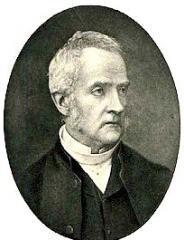
Arthur Penrhyn Stanley
Arthur Penrhyn Stanley was an English author born on December 13, 1815, and died on July 18, 1881. His works covered a range of subjects including history, religion, and literature. more
You May Also Like
Source: Sermons Preached Before His Royal Highness the Prince of Wales: During His Tour in the East in the Spring of 1862 with Notices of Some of the Localities Visited
Source: Thoughts that breathe
“Things become complicated if there are enough people to complexify them.”
Source: Family and Nation: The Godkin Lectures, Harvard University
Source: Family and Nation: The Godkin Lectures, Harvard University
Source: Coping: On the Practice of Government