Quotessence
Home / Quotes / Quote by Rufus Wainwright

Quote by Rufus Wainwright

“I would love to have a number one hit. The truth is if I don't get one, I'll be fine, but at the same time, the truth is that I'm dying for one, as well. But it's worth a shot, I think, while I still have cheekbones.”

Quote by Rufus Wainwright

Author
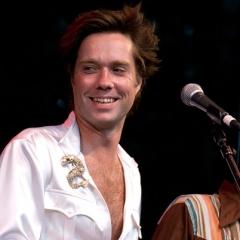
Rufus Wainwright
Rufus Wainwright

Rufus Wainwright is a talented singer known for his unique musical style and emotional voice. Born on July 22, 1973, he is the son of the renowned folk rock singer Loudon Wainwright III. Wainwright's music blends elements of pop, rock, jazz, and classical, often exploring themes of love, death, and religion in his lyrics. more

You May Also Like

“For the camera, I like the feeling of changing into different characters. Even though I'm not acting, I still have to be someone different to show the product. If I'm not being someone different, I won't find it fun. I love the shows because it transforms you into a different person. Not Malaika - it makes me someone else. Naturally, I'm quiet and crazy. But when they give me an outfit, like a very elegant outfit, it transforms me into this beautiful woman - I can feel it inside me. I like that, playing different characters. I'm really interested in acting.”

“I think fashion is really opened me up as a person. All eyes are on you when you do the shows and when you do the photo shoots. You have to know how to act around people. I used to be a shy kid in school. I didn't know how to interact with people and now I find it so easy. Fashion has really done something great for me and it's really changed me as a person. I've changed my style as well.”

“The young adult literature is relatively new - it just kind of exploded in the 2000s. When I grew up, there weren't bookstores with sections dedicated to teen lit, nor was my generation raised reading books written specifically for us. Because of that, today we still think of books for teens as children's books and so when you write a book that includes sensitive topics, it just seems even more controversial. What's troubling to me about that is these are issues adults know that teens deal with. Not writing about them makes them something we don't, or can't talk about.”

“I felt I had a very innocent childhood and I feel privileged by that. But as an adult, I know that there were people who didn't have that. There are a lot of teens who haven't had as easy a childhood as me, and having literature that explores these "darker" parts helps relieve the burden and stress they may be feeling. As a writer, there is often a temptation to draw back when we write for teens - to preserve their innocence. But the reality is, if someone has already had that innocence taken in their life, then not writing about it is just brushing it under the rug.”

“Personally, I never understood the power of having books written about your experience - whatever that experience may be - until I wrote one and started hearing from teens. I just got an email from a reader who said that "Thirteen Reasons Why" was the first time they had felt understood. A book shouldn't be anybody's first time feeling understood and that's where censorship bothers me. These books need to be out there.”

“A lot of authors see their book being banned or challenged as a badge of honor. But for me, it's nothing but frustrating and upsetting. I hear from readers that my work encouraged them to ask for help or reach out to someone about the situation they're in. When you hear stories like that on a daily basis and then hear adults call for your work to be banned, it's proof of why the stigma around these issues is so dangerous.”