“The Author To Her Book Thou ill-formed offspring of my feeble brain, Who after birth did'st by my side remain, Till snatcht from thence by friends, less wise than true, Who thee abroad exposed to public view, Made thee in rags, halting to th' press to trudge, Where errors were not lessened (all may judge). At thy return my blushing was not small, My rambling brat (in print) should mother call. I cast thee by as one unfit for light, The visage was so irksome in my sight, Yet being mine own, at length affection would Thy blemishes amend, if so I could. I washed thy face, but more defects I saw, And rubbing off a spot, still made a flaw. I stretcht thy joints to make thee even feet, Yet still thou run'st more hobbling than is meet. In better dress to trim thee was my mind, But nought save home-spun cloth, i' th' house I find. In this array, 'mongst vulgars may'st thou roam. In critic's hands, beware thou dost not come, And take thy way where yet thou art not known. If for thy father askt, say, thou hadst none; And for thy mother, she alas is poor, Which caused her thus to send thee out of door.”
Quote by Anne Bradstreet
Work
This volume includes a selection of Anne Bradstreet's poetry and prose, showcasing her contributions to early American literature and her exploration of themes such as faith, family, and the new world. more
Author
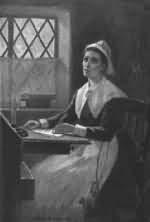
Anne Bradstreet, born on March 20, 1612, and died on September 16, 1672, was one of the most prominent poets in America before the American Revolutionary War. She is hailed as a pioneer of American poetry and her works are known for their religious themes and feminine perspective. Bradstreet's poetry holds a significant place in the history of American literature. more
You May Also Like
“Sometimes the things that matter to you won’t matter to anyone but you. And that’s redemption.”
“Billionaire-ism is a curable illness.”
“I wasn’t afraid of the darkness. I was afraid of how much of it felt like home.”
“Angels were never meant to bleed, yet every truth they touch leaves a wound.”