“Good is to be found neither in the sermons of religious teachers and prophets, nor in the teachings of sociologists and popular leaders, nor in the ethical systems of philosophers... And yet ordinary people bear love in their hearts, are naturally full of love and pity for any living thing. At the end of the day's work they prefer the warmth of the hearth to a bonfire in the public square. Yes, as well as this terrible Good with a capital 'G', there is everyday human kindness. The kindness of an old woman carrying a piece of bread to a prisoner, the kindness of a soldier allowing a wounded enemy to drink from his water-flask, the kindness of youth towards age, the kindness of a peasant hiding an old Jew in his loft. The kindness of a prison guard who risks his own liberty to pass on letters written by a prisoner not to his ideological comrades, but to his wife and mother. The private kindness of one individual towards another; a petty, thoughtless kindness; an unwitnessed kindness. Something we could call senseless kindness. A kindness outside any system of social or religious good. But if we think about it, we realize that this private, senseless, incidental kindness is in fact eternal. It is extended to everything living, even to a mouse, even to a bent branch that a man straightens as he walks by. Even at the most terrible times, through all the mad acts carried out in the name of Universal Good and the glory of States, times when people were tossed about like branches in the wind, filling ditches and gullies like stones in an avalanche – even then this senseless, pathetic kindness remained scattered throughout life like atoms of radium.”
Quote by Vasily Grossman
Work
Browse quotes and source details for this work. more
Author
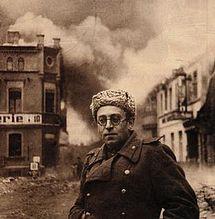
Vasily Grossman (December 12, 1905 – September 14, 1964) was a Soviet Jewish writer and journalist, best known for his works on World War II. Born in Berdychiv, Ukraine, he initially studied chemical engineering before turning to literature. As a war correspondent for the Red Star newspaper, he witnessed the Battle of Stalingrad and documented Nazi atrocities. His masterpiece, Life and Fate, was banned by Soviet authorities for its criticism of Stalinism and only published in the 1980s. Grossman's works explore themes of war, totalitarianism, and humanity, earning him recognition as a significant voice in 20th-century Russian literature. more
You May Also Like
“His kindness was only meant to make later torments crueler.”
“If you don't know what to do, just be kind. You can't go wrong.”
“Kindness shouldn’t have to be earned. It should be freely given.”