Quotessence
Home / Quotes / Quote by Siddhartha Mukherjee

Quote by Siddhartha Mukherjee

“We are chemical apes: having discovered the capacity to extract, purify, and react molecules to produce new and wondrous molecules, we have begun to spin a new chemical universe around ourselves. Our bodies our cells, our genes are thus being immersed and reimmersed in a changing flux of molecules -pesticides, pharmaceutical drugs, plastics, cosmetics, estrogens, food products, hormones, even novel forms of physical impulses, such as radiation and magnetism. Some of these, inevitably, will be carcinogenic. We cannot wish this world away; our task, the, is to sift through it vigilantly to discriminate bona fide carcinogens from innocent and useful bystanders.”

Quote by Siddhartha Mukherjee

Work

The Emperor of All Maladies: A Biography of Cancer

This comprehensive biography delves into the origins, development, and treatment of cancer, offering a historical and scientific perspective on one of the most significant health challenges of our time. more

Author
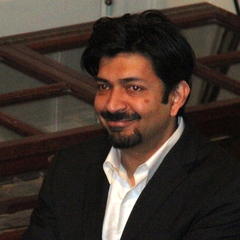
Siddhartha Mukherjee

Siddhartha Mukherjee is a distinguished physician and oncologist, born in 1970. He has made substantial contributions to cancer research and has been recognized with numerous awards, including the Pulitzer Prize for General Non-Fiction for his book 'The Emperor of All Maladies: A Biography of Cancer'. more

You May Also Like

“When one develops one’s natural needs, desires, inclinations, and capacities in ways that harmonise and unify one’s inner psychological states and fits these into a grand natural order that facilitates successful action in the world, and when one reaches the point where one regularly and spontaneously achieves these dual aims, one feels that one is one’s element, has found one’s home, and is performing one’s proper role in the world. Such action generates a special feeling of joy or happiness not only for those who behave this way but also for those who observe such behaviour.”

“There are other beliefs which, though disproved countless times, never die out, because they appeal, not to something in everyone, but to a certain perennial type of person. An example is, the belief that everyone is at bottom selfish, or that no one ever acts intentionally except from motives of self-interest. There is a perennial human type to whom this belief is peculiarly and irresistibly congenial. It is almost never a woman. It is a kind of man who is deficient in generous or even disinterested impulses himself, and knows it, but keeps up his self-esteem by thinking that everyone else is really in the same case. He prides himself, both on having the perspicacity to realise, what most people disguise even from themselves, that everyone is selfish, and on having the uncommon candour not to conceal this unpleasant home truth. Who has not met people of this type? In the Australian-English of 50 years ago, there was a wonderful expression for this kind of man: he was said to be 'as flash as a rat with a gold tooth”

“Every morning, I eat this dish called -hope-. Crumbs mostly, but without it, I'm not even human.' A long pause while her mind spun. 'But that's just it. There are no guarantees. Because if you can guarantee it, it's not hope.' [Joe] ... He [Pockets] adjusted his feet. 'I've been in some places where there is no hope, and yet somehow it swims through the cracks. Rises to the surface. I've found hope staring me in the face when reason screamed I had non. No matter what you do--ignore it, shove it in a closet, drown it with drink and pill, or stab it with science, experts, and talking heads--you can't kill hope. Not in all of human history has hope ever been laid to rest. When we breathe in, it's the stuff that expands our lungs. It's the reason we're not just dust.' She tried to laugh. 'I thought love did all that.' He sucked through his teeth. 'It's tough to tell those two apart, mum. But if you press me, love is what makes us who we are. Hope is how we express us. Hope is love with legs.”

“Ancestry is Garbage (The Sonnet) DNA test may reveal your ancestry, But there is no DNA test for character. IQ may reveal deficit in logical aptitude, There's no IQ test for excellence or genius. If bloodline dictated destiny, We'd still be dangling from trees. Not that we've done much better, But at least there is possibility. In the end we are all monkeys, We all come from the jungle. Question is, have we conquered the jungle that lurks in our heart, have we risen yet above the animal! Ancestry is garbage, IQ is useless, Living humans don't rely on such nonsense. Heart, brain, backbone, these make who we are, Everything else is mythology of the savages.”

“Neither nature nor history can tell us what we ought to do. Facts, whether those of nature or those of history, cannot make the decision for us, they cannot determine the ends we are going to choose. It is we who introduce purpose and meaning into nature and into history. Men are not equal; but we can decide to fight for equality. Human institutions such as the state are not rational, but we can decide to fight to make them more rational. We ourselves and our ordinary language are, on the whole, emotional rather than rational; but we can try to become a little more rational, and we can train ourselves to use our language as an instrument not of self-expression (as our romantic educationists would say) but of rational communication. History itself I mean the history of power politics, of course, not the non-existent story of the development of mankind has no end nor meaning, but we can decide to give it both. We can make it our fight for the open society and against its antagonists (who, when in a corner, always protest their humanitarian sentiments, in accordance with Pareto's advice) and we can interpret it accordingly. Ultimately, we may say the same about the 'meaning of life'. It is up to us to decide what shall be our purpose in life, to determine our ends. This dualism of facts and decisions is, I believe, fundamental. Facts as such have no meaning; they can gain it only through our decisions. Historicism is only one of many attempts to get over this dualism; it is born of fear, for it shrinks from realizing that we bear the ultimate responsibility even for the standards we choose. But such an attempt seems to me to represent precisely what is usually described as superstition. For it assumes that we can reap where we have not sown; it tries to persuade us that if we merely fall into step with history everything will and must go right, and that no fundamental decision on our part is required; it tries to shift our responsibility on to history, and thereby on to the play of demoniac powers beyond ourselves; it tries to base our actions upon the hidden intentions of these powers, which can be revealed to us only in mystical inspirations and intuitions; and it thus puts these actions and decisions on the moral level of one who, inspired by horoscopes and dreams, chooses his lucky number in a lottery.”