“A foreign publisher of [The Selfish Gene] confessed that he could not sleep for three nights after reading it, so troubled was he by what he saw as its cold, bleak message. Others have asked me how I can bear to get up in the mornings. A teacher from a distant country wrote to me reproachfully that a pupil had come to him in tears after reading the same book, because it had persuaded her that life was empty and purposeless. He advised her not to show the book to any of her friends, for fear of contaminating them with the same nihilistic pessimism. Similar accusation of barren desolation, of promoting an arid and joyless message, are frequently flung at science in general, and it is easy for scientists to play up to them. My colleague Peter Atkins begins his book *The Second Law* (1984) in this vein: 'We are the children of chaos, and the deep structure of change is decay. At root, there is only corruption, and the unstemmable tide of chaos. Gone is purpose; all that is left is direction. This is the bleakness we have to accept as we peer deeply and dispassionately into the heart of the Universe.' But such very proper purging of saccharine false purpose; such laudable tough-mindedness in the debunking of cosmic sentimentality must not be confused with a loss of personal hope. Presumably there is indeed no purpose in the ultimate fate of the cosmos, but do any of us really tie our life's hopes to the ultimate fate of the cosmos? Of course we don't; not if we are sane. Our lives are ruled by all sorts of closer, warmer, human ambitions and perceptions. To accuse science of robbing life of the warmth that makes it worth living is so preposterously mistaken, so diametrically opposite to my own feelings and those of most working scientists, I am almost driven to the despair of which I am wrongly suspected. But in this book I shall try a more positive response, appealing to the sense of wonder in science because it is so sad to think what these complainers and naysayers are *missing*. This is one of the things that the late Carl Sagan did so well, and for which he is sadly missed. The feeling of awed wonder that science can give us is one of the highest experiences of which the human psyche is capable. It is truly one of the things that makes life worth living and it does so, if anything, more effectively if it convinces us that the time we have for living is finite.”
Quote by Richard Dawkins
Work
This book delves into the intricate relationship between science and the human experience, examining the ways in which scientific discoveries have shaped our understanding of the universe. It intertwines scientific explanations with philosophical insights, encouraging readers to ponder the nature of reality and the limits of human knowledge. more
Author
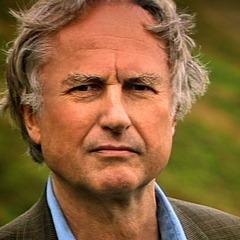
Richard Dawkins is a British ethologist, writer, and thinker, known for his contributions to evolutionary theory, particularly in the field of modern synthesis. He is widely recognized for his best-selling book 'The Selfish Gene', which explains the central role of genes in biological evolution. Dawkins has made significant impacts in the field of science communication and has sparked widespread discussions about human behavior and morality. more
You May Also Like
“US trucks and automobiles kill more than one million vertebrates daily.”
“...more than 90 percent of birds feed upon them (moths).”
“We have a cognitive bias, dismissing plants and trees as inferior to other life-forms.”