Quotessence
Home / Quotes / Quote by William J. Bernstein

Quote by William J. Bernstein

“The coming of the Prophet would sweep away this fragmented and pluralistic pattern of trade in the ancient world. Within a few centuries of Muhammad's death, one culture, one religion, and one law would unify the commerce of the Old World's three continents nearly a millennium before the arrival of the first European ships in the East.”

Quote by William J. Bernstein

Work

A Splendid Exchange: How Trade Shaped the World

Browse quotes and source details for this work. more

Author
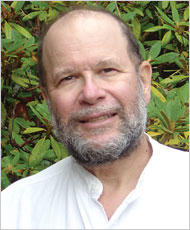
William J. Bernstein

William J. Bernstein, born in 1954, is a renowned investment expert and author. His career has been dedicated to the field of investments, particularly in the areas of mutual funds and index funds. As an investment expert, Bernstein has made significant contributions to the understanding of portfolio management and asset allocation. His book, 'The Four Pillars of Investing,' is a cornerstone in the field, providing in-depth insights into the principles and strategies of portfolio construction. Bernstein's work has had a profound impact on both individual and institutional investors, and he is widely regarded as an authority in the investment community. more

You May Also Like

“পরিস্থিতির স্বার্থে হযরত মোহাম্মদ [সা.] মক্কা ছেড়ে মদিনায় যাবার পর হিংসুটে বোকারা ভেবেছিল তাদের জয় হয়েছে! ইতিহাসে তাদের স্থান শুধুই ষড়যন্ত্রকারী শয়তান হিসেবে কিন্তু হযরত মোহাম্মদ [সা.] সর্বশেষ নবী ও সর্বশ্রেষ্ঠ মহামানব!”

“Allah has no partners, Allah has no equal, Allah the All-Seeing, the All-Hearing, the All-Powerful. Allah the Everlasting, who has no beginning and no end, Beyond our imagination, we cannot even begin to comprehend, Praise Allah and upon Muhammad ﷺ our blessings we send.”

“This doctrine of total inability which declares that men are dead in sin does not mean that all men are equally bad, nor that any man is as bad as he could be, nor that anyone is entirely destitute of virtue, nor that human nature is equal in itself, nor that man’s spirit in inactive, and much less does it mean that the body is dead. What is does mean is that since the fall, man rests under the curse of sin, that he is actuated by wrong principles, and that he is wholly unable to love God, or to do anything meriting salvation. His corruption is extensive, but not necessarily intensive. It is in this sense that man, since the fall, is utterly indisposed, disabled, and made opposite to all good, wholly inclined to all evil. He possesses a fixed bias of the will against God, and instinctively and willingly and turns to evil. He is an alien by birth, and a sinner by choice. The inability under which he labors is not an inability to exercise volition, but an inability to be willing to exercise holy volitions. And it is this phase of it which led Luther to declare that ‘free will’ is an empty term, whose reality is lost; and a lost liberty, according to my grammar, is no liberty at all.”

“They worked hard all their lives, what they basically did was, they built a little Ukraine, a little society for themselves here in Brisbane. They did this in all the cities … not a ghetto, it wasn’t inward looking to that extent, but it was inward looking in the sense that it was a place to go—somewhere where you could identify; where you could be understood; go about remembering and preserving your roots. - Walter Sucharsky, 2nd Generation Australian”

“When you’re talking about the culture, maybe there is something that just permeates sort of thing, you know you pass it on or take it in, without ever being aware of it. - Ivan Pavelić, Croatia”

“Political calculation and local suffering do not entirely explain the participation in these pogroms. Violence against Jews served to bring the Germans and elements of the local non-Jewish populations closer together. Anger was directed, as the Germans wished, toward the Jews, rather than against collaborators with the Soviet regime as such. People who reacted to the Germans' urging knew that they were pleasing their new masters, whether or not they believed that the Jews were responsible for their own woes. By their actions they were confirming the Nazi worldview. The act of killing Jews as revenge for NKVD executions confirmed the Nazi understanding of the Soviet Union as a Jewish state. Violence against Jews also allowed local Estonians, Latvian, Lithuanians, Ukrainians, Belarusians, and Poles who had themselves cooperated with the Soviet regime to escape any such taint. The idea that only Jews served communists was convenient not just for the occupiers but for some of the occupied as well. Yet this psychic nazification would have been much more difficult without the palpable evidence of Soviet atrocities. The pogroms took place where the Soviets had recently arrived and where Soviet power was recently installed, where for the previous months Soviet organs of coercion had organized arrests, executions, and deportations. They were a joint production, a Nazi edition of a Soviet text. P. 196”