Quotessence
Home / Quotes / Quote by Virgil

Quote by Virgil

Work

The Aeneid

The Aeneid is an epic poem written by the ancient Roman poet Virgil. It narrates the journey of Aeneas, a Trojan hero, after the fall of Troy, his travels, and his eventual establishment of the city of Rome. The poem is renowned for its rich symbolism, complex characters, and profound exploration of themes such as fate, duty, and the human condition. more
Author

Virgil
Virgil

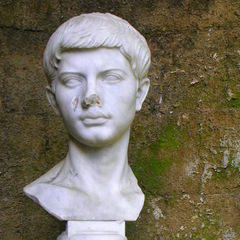
Virgil, a Roman poet, was born on October 15, 70 BC and died on September 21, 19 BC. He is one of the greatest poets in ancient Rome and is known for his epic poem, 'The Aeneid'. more

You May Also Like

“Then at once they reached and hovered upon the imminent verge of sleep - but an intruder came, now, that would not "down". It was conscience. They began to feel a vague fear that they had been doing wrong to run away; and next they thought of the stolen meat, and then the real torture came [...] So they inwardly resolved that so long as they remained in the business, their piracies should not again be sullied with the crime of stealing. Then conscience granted a truce, and these curiously inconsistent pirates fell peacefully to sleep.”

“Whatever we may say, all of us suffer from disturbed sleep at times. Some in truth hardly sleep, though some who sleep copiously swear that they do not. Some are disquieted by incessant dreams, and a fortunate few are visited often by dreams of delightful character. Some will say that they were at one time troubled in sleeping but have 'recovered' from it, as though awareness were a disease, as perhaps it is.”

“She had not heard him enter, and hardly realized his presence there. She was yawning, and he saw the red interior of her mouth as if it had been a snake's. She had stretched one arm so high above her coiled-up cable of hair that he could see its satin delicacy above the sunburn; her face was flushed with sleep, and her eyelids hung heavy over their pupils. The brim-fulness of her nature breathed from her. It was a moment when a woman's soul is more incarnate than at any other time; when the most spiritual beauty bespeaks itself flesh; and sex takes the outside place in the presentation.”