Quotessence
Home / Quotes / Quote by Daphne du Maurier

Quote by Daphne du Maurier

“I left them to it, the pointing of fingers on maps, the tracing of mountain villages, the tracks and contours on maps of larger scale, and basked for the one evening allowed to me in the casual, happy atmosphere of the taverna where we dined. I enjoyed poking my finger in a pan and choosing my own piece of lamb. I liked the chatter and the laughter from neighbouring tables. The gay intensity of talk - none of which I could understand, naturally - reminded me of left-bank Paris. A man from one table would suddenly rise to his feet and stroll over to another, discussion would follow, argument at heat perhaps swiftly dissolving into laughter. This, I thought to myself, has been happening through the centuries under this same sky, in the warm air with a bite to it, the sap drink pungent as the sap running through the veins of these Greeks, witty and cynical as Aristophanes himself, in the shadow, unmoved, inviolate, of Athene's Parthenon. ("The Chamois")”

Quote by Daphne du Maurier

Work

Echoes from the Macabre: Selected Stories

Browse quotes and source details for this work. more

Author
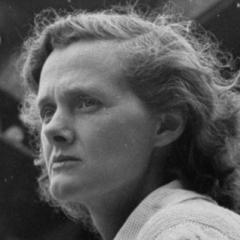
Daphne du Maurier
Daphne du Maurier

British author known for her suspense novels and romantic stories. Daphne du Maurier's works are characterized by their mysterious and supernatural elements, with her most famous novels being 'Rebecca' and 'The Turn of the Screw'. Her writing style has had a profound impact on literature. more

You May Also Like

“The lover drinks and the cup-bearer pours. The lover thinks but the cup-bearer knows: love begets love. Since this wine is love, then this cup is love, then this tavern is love, then this life is love.”

“One Autumn night, in Sudbury town, Across the meadows bare and brown, The windows of the wayside inn Gleamed red with fire-light through the leaves Of woodbine, hanging from the eaves Their crimson curtains rent and thin. As ancient is this hostelry As any in the land may be, Built in the old Colonial day, When men lived in a grander way, With ampler hospitality; A kind of old Hobgoblin Hall, Now somewhat fallen to decay, With weather-stains upon the wall, And stairways worn, and crazy doors, And creaking and uneven floors, And chimneys huge, and tiled and tall. A region of repose it seems, A place of slumber and of dreams, Remote among the wooded hills! For there no noisy railway speeds, Its torch-race scattering smoke and gleeds; But noon and night, the panting teams Stop under the great oaks, that throw Tangles of light and shade below, On roofs and doors and window-sills. Across the road the barns display Their lines of stalls, their mows of hay, Through the wide doors the breezes blow, The wattled cocks strut to and fro, And, half effaced by rain and shine, The Red Horse prances on the sign. Round this old-fashioned, quaint abode Deep silence reigned, save when a gust Went rushing down the county road, And skeletons of leaves, and dust, A moment quickened by its breath, Shuddered and danced their dance of death, And through the ancient oaks o'erhead Mysterious voices moaned and fled. These are the tales those merry guests Told to each other, well or ill; Like summer birds that lift their crests Above the borders of their nests And twitter, and again are still. These are the tales, or new or old, In idle moments idly told; Flowers of the field with petals thin, Lilies that neither toil nor spin, And tufts of wayside weeds and gorse Hung in the parlor of the inn Beneath the sign of the Red Horse. Uprose the sun; and every guest, Uprisen, was soon equipped and dressed For journeying home and city-ward; The old stage-coach was at the door, With horses harnessed,long before The sunshine reached the withered sward Beneath the oaks, whose branches hoar Murmured: "Farewell forevermore. Where are they now? What lands and skies Paint pictures in their friendly eyes? What hope deludes, what promise cheers, What pleasant voices fill their ears? Two are beyond the salt sea waves, And three already in their graves. Perchance the living still may look Into the pages of this book, And see the days of long ago Floating and fleeting to and fro, As in the well-remembered brook They saw the inverted landscape gleam, And their own faces like a dream Look up upon them from below.”

“And because I found it in my youth, the bar was that much more sacred, its image clouded by that special reverence children accord those places where they feel safe. Others might feel this way about a classroom or playground, a theater or church, a laboratory or library or stadium. Even a home. But none of these places claimed me. We exalt what is at hand. Had I grown up beside a river or an ocean, some natural avenue of self-discovery and escape, I might have mythologized it. Instead I grew up 142 steps from a glorious old American tavern, and that has made all the difference.”

“Need 'nother whiskey. Whiskey chaser. Gotta get two men drunk." Mr. Cohan placed both hands on the bar. "Mr. Walsh," he said severely, "in Gavagan's we will serve a man a drink to wet his whistle, or even because his old woman has pasted him with a dornick, but a drink to get drunk with I do not sell. Now I'm telling you you've had enough for tonight, and in the morning you'll be thanking me..." ("My Brother's Keeper")”

“At the Saleve, the stove is drawing badly. This and the stale tobacco, rough wine and a perpetual acrid pungency (disinfectant or vomit, or both) are almost intolerable. But there’s that tingling you’ve only got to register once: within two seconds it gets you at the back of your throat, and then immediately diffuses like a drop of oil. A sudden and surprising sweetness. Breathe in through your mouth, out through your nose. That’s it. You’re hooked. Someone here is smoking hashish.”

“The ‘Oberge des Mailletz’ is by far the oldest tavern of which any record can found in the City archives. In 1292, Adam des Mailletz, inn-keeper, paid a tithe of 18 sous and 6 deniers.This we learn from the Tax Register of the period. At the time it was founded, the Trois-Mailletz was the meeting place of masons, who under the supervision of Jehan de Chelles, carved out of white stone the biblical characters destined to grace the north and south choirs of Notre-Dame. Underneath the building, there are two floors of superimposed cellars: the deeper ones date from the Gallo-Roman period. What remains of the instruments of torture found in the cellars of the Petit-Châtelet have been housed here, along with some other restored objects. A modest bar counter, a long-haired patron who bizarrely manages never to be freshly shaven or downright bearded. A stove in the middle of the shabby room; simple straightforward folk, less drunk than at Rue de Bièvre, and less dirty. Just what we needed.”