“We will start with Hawking's few quotations. “The quantum theory of gravity has opened up a new possibility, in which there would be no boundary to spacetime and so there would be no need to specify the behavior at the boundary. There would be no singularities at which the laws of science broke down and no edge of spacetime at which one would have to appeal to God or some new law to set the boundary conditions for spacetime. One could say: ‘The boundary condition of the universe is that it has no boundary.’ The universe would be completely self-contained and not affected by anything outside itself. It would neither be created nor destroyed. It would just BE.” Or, in the same manner: “There ought to be something very special about the boundary conditions of the universe, and what can be more special than the condition that there is no boundary?” Also, he stated, “According to the no-boundary proposal, asking what came before the Big Bang is meaningless—like asking what is south of the South Pole—because there is no notion of time available to refer to. The concept of time only exists within our universe.” The “no-boundary proposal” is a classic example of a device called in Latin, Deus ex machina—God from the machine, invented by the ancient Greek dramatists Aeschylus and Euripides. The primary purpose of the device was to resolve the irresolvable. The question of what came before the Big Bang is not meaningless. We cannot accept that our Big Bang is the beginning of all existence. Since there is "no notion of time available to refer to," that does not mean there is nothing to refer to. This reasoning is a logical fallacy based on the idea that there should be nothing to refer to if there is no time to refer to it. This kind of reasoning falsifies reality to fit the argument. For this statement to be accurate, there must be proof that there is nothing to refer to, not "no notion of time to refer to." The lack of notion of time to refer to or its availability is not proof that there is nothing to refer to, but only that there is no notion of time to refer to and that it is not available. The lack of availability is only proof that something is not available to someone but not proof that nothing exists beyond the “point” where “time” stops. If Something, the Being, the Universal Source of Everything, is not available or approachable in any way by some particular scientist, that does not mean that the Universal Source of Everything (the Absolute) does not exist beyond the physical world. In this sense, the no-boundary proposal is a boundary proposal of a different kind. Since it is impossible to speculate about abstract concepts or ideas, such as God, Absolute, or Universal Source, it is easier to invent some trick (pardon my language), with all due respect, to compensate for the lack of understanding of the most abstract ideas and to compensate for the limitations of a frame of mind of any particular scientist or philosopher. In this case, the no-boundary proposal precisely serves the purpose of a boundary—to limit the world to the point where “time stops” and declare that there is nothing beyond because time stops there. That should mean that the laws of nature and science stop at this artificially produced boundary. But what do we have as proof that this is true? Precisely like in religions, we have words that sound seductively beautiful and convincing. Also, to a large extent, these words are supported by scientific knowledge and investigation. Yet, they are just words, and in no way do they prove that there is no immaterial Universal Source beyond the “point” where time stops.”
Quote by Dejan Stojanovic
Book:ABSOLUTE
Work
Author
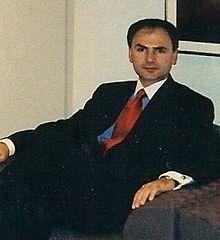
Dejan Stojanovic
Dejan Stojanovic, born on March 11, 1959, is a Serbian poet known for his profound emotions and unique style in his poetry, which has won the hearts of readers worldwide. more
You May Also Like
Source: ABSOLUTE
Source: ABSOLUTE
Source: ABSOLUTE
Source: ABSOLUTE
Source: ABSOLUTE
Source: ABSOLUTE
Source: ABSOLUTE
Source: ABSOLUTE
Source: ABSOLUTE
Source: ABSOLUTE