“Progress imposes not only new possibilities for the future but new restrictions.”
Quote by Norbert Wiener
Work
The human use of human beings: cybernetics and society
This book examines the concept of cybernetics—the science of communication and control in machines and living organisms—and applies it to human society. The author discusses how information theory and feedback loops influence social structures, governance, and individual autonomy. It argues that understanding these principles is essential for using technology and knowledge in ways that enhance human dignity and freedom, rather than diminishing them. The text reflects mid-20th-century concerns about automation, control systems, and the ethical responsibilities of humans in an increasingly interconnected world. more
Author
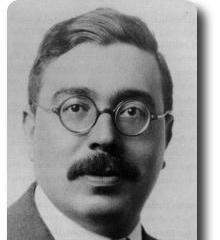
Norbert Wiener
Norbert Wiener, born on November 26, 1894, and died on March 18, 1964, was an American mathematician and a founding figure in the field of cybernetics. Known as the 'father of the information age,' Wiener made significant contributions to mathematics, physics, and engineering, particularly in the areas of stochastic processes, Fourier analysis, and control theory. more
You May Also Like
Source: The human use of human beings: cybernetics and society
Source: The human use of human beings: cybernetics and society
Source: The human use of human beings: cybernetics and society
“To live effectively is to live with adequate information.”
Source: The human use of human beings: cybernetics and society
Source: The human use of human beings: cybernetics and society
“Any labor which competes with slave labor must accept the economic conditions of slave labor.”
Source: The human use of human beings: cybernetics and society
Source: The human use of human beings: cybernetics and society
Source: The human use of human beings: cybernetics and society
Source: The human use of human beings: cybernetics and society