“Difference of thoughts will produce difference of language. He that thinks with more extent than another, will want words of a larger meaning; he that thinks with more subtilty will seek for terms of more nice discrimination; and where is the wonder, since words are but the images of things, that he who never knew the original should not know the copies?”
Quote by Samuel Johnson
Work
The Works of Samuel Johnson, LL.D.: With Murphy's Essay
This volume encompasses a variety of works by Samuel Johnson, a distinguished figure in the English literary tradition. It features Johnson's dictionary, which is considered a foundational text in the history of lexicography, as well as an essay contributed by Murphy. more
Author
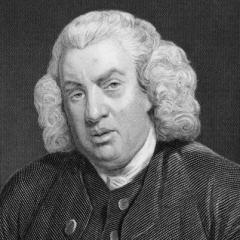
Samuel Johnson
Samuel Johnson was an English writer, poet, and lexicographer, renowned for his comprehensive English dictionary, 'A Dictionary of the English Language', published in 1755. His distinctive writing style and wit have cemented his place as a significant figure in the history of English literature. more
You May Also Like
Source: The word-a-day vocabulary builder
“We can shape events in each other's brains with exquisite precision.”
Source: The Language Instinct: How the Mind Creates Language
“True intelligence does not derive from thought. True intelligence uses thought.”
“What you think and do affects all other people.”
Source: The Power of Intention
Source: Freedom, Love, and Action
Source: The Advent of the Algorithm: The Idea that Rules the World