Quotessence
Home / Quotes / Quote by Gottlob Frege

Quote by Gottlob Frege

“Die Gedanken sind weder Dinge der Außenwelt noch Vorstellungen. Ein drittes Reich muß anerkannt werden. Was zu diesem gehört, stimmt mit den Vorstellungen darin überein, daß es nicht mit den Sinnen wahrgenommen werden kann, mit den Dingen aber darin, daß es keines Trägers bedarf, zu dessen Bewußtseinsinhalte es gehört.”

Quote by Gottlob Frege

Work

Logical Investigations

Browse quotes and source details for this work. more

Author
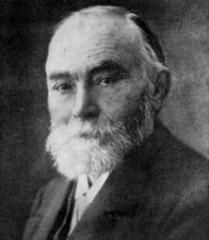
Gottlob Frege
Gottlob Frege

Gottlob Frege (November 8, 1848 - July 26, 1925) was a German mathematician, logician, and philosopher. He is considered one of the founders of modern logic and his work has had a profound impact on mathematics, logic, and philosophy. more

You May Also Like

“B626 Sein ist offenbar kein reales Prädikat, d.i. ein Begriff von irgend etwas, was zu dem Begriffe eines Dinges, oder gewisser Bestimmungen an sich selbst... B627 Und so enthält das Wirkliche nichts mehr, als das bloss Mögliche. Hundert wirkliche Thaler enthalten nicht das mindeste mehr, als hundert mögliche... Aber in meinem Vermögenszustande ist mehr bei hundert wirklichen Thalern, als bei dem blossen Begriffe derselben, ( d.i. ihrer Moeglichkeit ).”

“The three greatest metaphysicians who ever existed - Plato, Aristotle and St.Thomas Aquinas - had no system in the idealistic sense of the word. Their ambition was not to achieve philosophy once and for all, but to maintain it and to serve it in ours. For us, as for them, the great thing is not to achieve a system of the world as if being could be deduced from thought, but to relate reality, as we know it, to the permanent principles in whose light all the changing problems of science, of ethics and of art have to be solved. A metaphysics of existence cannot be a system wherewith to get rid of philosophy, it is an always open inquiry, whose conclusions are both always the same and always new, because it is conducted under the guidance of immutable principles, which will never exhaust experience, or be themselves exhausted by it. For even though, as is impossible, all that which exists were known to us, existence itself would still remain a mystery. Why, asked Leibniz, is there something rather than nothing ?”

“Wie wir „ursprünglich verstehen “, was Wahrheit ist, wenn wir erkennen, und was Gutheit ist, wenn unser Streben Erfüllung findet, so verstehen wir, was Schönheit ist, wenn jener „Glanz “ uns an die Seele rührt. Er begegnet uns in der sinnlichen Welt als das Strahlen des körperlichen Lichtes selbst, ohne das uns alle sinnliche Schönheit verborgen bliebe, als Farbenglanz und als Liebreiz körperlicher Gestalten. Aber er ist nicht an die Sinnenwelt gebunden. Es gibt eine geistige Schönheit : die Schönheit der Menschenseele,...”

“The interest of initiation for an understanding of archaic mentality lies predominantly in its showing us that the true man-the spiritual man-is not given, is not the result of a natural process. He is "made" by the old masters, in accordance with the models revealed by the Divine Beings and preserved in the myths. These old masters constitute the spiritual elites of archaic societies. It is they who know, who know the world of spirit, the truly human world. Their function is to reveal the deep meaning of existence to the new generations and to help them assume the responsibility of being truly men and hence of participating in culture. But since for archaic societies "culture" is the sum of the values received from Supernatural Beings, the function of initiation may be reduced to this : to each new generation, it reveals a world open to the transhuman, a world that, in our philosophical terminology, we should call transcendental.”