“I repeat Sturgeon's Revelation, which was wrung out of me after twenty years of wearying defense of science fiction against attacks of people who used the worst examples of the field for ammunition, and whose conclusion was that ninety percent of it is crud.”
Quote by Theodore Sturgeon
Author
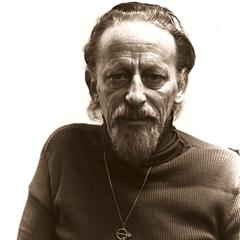
Theodore Sturgeon
Theodore Sturgeon (February 26, 1918 – May 8, 1985) was an American science fiction writer and short story master, known for his unique narrative style and profound humanistic concerns. Born in Staten Island, New York, as Edward Hamilton Waldo, he later adopted his stepfather's surname. Active from the 1940s to the 1970s, Sturgeon wrote classic stories like 'Microcosmic God' and 'More Than Human,' and coined 'Sturgeon's Law'—'90% of science fiction is crud, but then 90% of everything is crud.' His works explored human nature, emotion, and social margins, deeply influencing later SF. He won Hugo and Nebula Awards and is often called 'the Shakespeare of science fiction.' more
You May Also Like
Source: Odd John and Sirius
Source: Last and First Men, & Star Maker: Two Science-fiction Novels
Source: Last and First Men, & Star Maker: Two Science-fiction Novels
Source: Last and First Men, & Star Maker: Two Science-fiction Novels
“A prude is a person who thinks that his own rules of propriety are natural laws.”
Source: Time Enough for Love
“In a mature society, 'civil servant' is semantically equal to 'civil master.'”
Source: Time Enough for Love
Source: Beyond This Horizon