“It cannot be said that the Constitution formed 'the people of the United States,' for all time, into a corporation. It does not speak of 'the people' as a corporation, but as individuals. A corporation does not describe itself as 'we,' nor as 'people,' nor as 'ourselves.' Nor does a corporation, in legal language, have any 'posterity.'”
Quote by Lysander Spooner
Work
Let's Abolish Government
This book delves into the idea of removing government structures and examines the consequences such a change could have on various aspects of society, including governance, law, and social order. more
Author
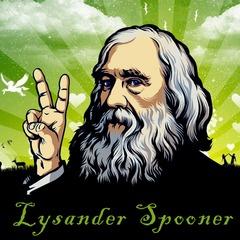
Lysander Spooner
Lysander Spooner was an American philosopher, abolitionist, and legal theorist who lived from January 19, 1808, to May 14, 1887. He is recognized for his contributions to the philosophy of individual rights and his advocacy for the abolition of slavery. Spooner's work has had a profound impact on the fields of law and philosophy. more
You May Also Like
Source: A New Banking System: the Needful Capital for Rebuilding the Burnt District
Source: The collected works of Lysander Spooner
Source: The collected works of Lysander Spooner
Source: The Deist's Reply to the Alleged Supernatural Evidences of Christianity, Etc
Source: The collected works of Lysander Spooner
Source: A Defence for Fugitive Slaves
Source: The Collected Works of Lysander Spooner: Legal writings
Source: No Treason: No. 1-
Source: The Unconstitutionality of Slavery
Source: The Unconstitutionality of Slavery