Quotessence
Home / Quotes / Quote by Hermann von Helmholtz

Quote by Hermann von Helmholtz

“The total quantity of all the forces capable of work in the whole universe remains eternal and unchanged throughout all their changes. All change in nature amounts to this, that force can change its form and locality, without its quantity being changed. The universe possesses, once for all, a store of force which is not altered by any change of phenomena, can neither be increased nor diminished, and which maintains any change which takes place on it.”

Quote by Hermann von Helmholtz

Work

Popular Lectures on Scientific Subjects

This work presents a series of lectures on various scientific topics intended for educated readers without specialized scientific training. The lectures cover fundamental principles and phenomena in physics and natural philosophy, explaining complex scientific concepts in accessible language. Written by a leading figure in Victorian science, the collection reflects the era's enthusiasm for disseminating scientific knowledge to the broader public. The lectures address observations from the natural world and practical applications of scientific reasoning, demonstrating how systematic inquiry can illuminate everyday phenomena. more

Author
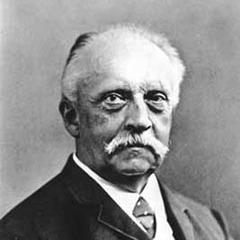
Hermann von Helmholtz

Hermann von Helmholtz was a German physicist, physiologist, and physician. He made significant contributions to the fields of physiology, physics, and philosophy, particularly in the theories of hearing and vision. His research had a profound impact on subsequent physiology and psychology. more

You May Also Like

“We have found that where science has progressed the farthest, the mind has but regained from nature that which the mind has put into nature. We have found a strange foot-print on the shores of the unknown. We have devised profound theories, one after another, to account for its origin. At last, we have succeeded in reconstructing the creature that made the foot-print. And Lo! it is our own.”

“What a glorious title, Nature, a veritable stroke of genius to have hit upon. It is more than a cosmos, more than a universe. It includes the seen as well as the unseen, the possible as well as the actual, Nature and Nature's God, mind and matter. I am lost in admiration of the effulgent blaze of ideas it calls forth.”

“Wheeler hopes that we can discover, within the context of physics, a principle that will enable the universe to come into existence "of its own accord." In his search for such a theory, he remarks: "No guiding principle would seem more powerful than the requirement that it should provide the universe with a way to come into being." Wheeler likened this 'self-causing' universe to a self-excited circuit in electronics.”

“As the component parts of all new machines may be said to be old[,] it is a nice discriminating judgment, which discovers that a particular arrangement will produce a new and desired effect. ... Therefore, the mechanic should sit down among levers, screws, wedges, wheels, etc. like a poet among the letters of the alphabet, considering them as the exhibition of his thoughts; in which a new arrangement transmits a new idea to the world.”

“Characteristically skeptical of the idea that living things would faithfully follow mathematical formulas, [Robert Harper] seized upon factors in corn which seemed to blend in the hybrid-rather than be represented by plus or minus signs, and put several seasons into throwing doubt upon the concept of immutable hypothetical units of inheritance concocted to account for selected results.”

“Chemistry has the same quickening and suggestive influence upon the algebraist as a visit to the Royal Academy, or the old masters may be supposed to have on a Browning or a Tennyson. Indeed it seems to me that an exact homology exists between painting and poetry on the one hand and modem chemistry and modem algebra on the other. In poetry and algebra we have the pure idea elaborated and expressed through the vehicle of language, in painting and chemistry the idea enveloped in matter, depending in part on manual processes and the resources of art for its due manifestation.”