Quotessence
Home / Quotes / Quote by Robert Fulton

Quote by Robert Fulton

“As the component parts of all new machines may be said to be old[,] it is a nice discriminating judgment, which discovers that a particular arrangement will produce a new and desired effect. ... Therefore, the mechanic should sit down among levers, screws, wedges, wheels, etc. like a poet among the letters of the alphabet, considering them as the exhibition of his thoughts; in which a new arrangement transmits a new idea to the world.”

Quote by Robert Fulton

Author
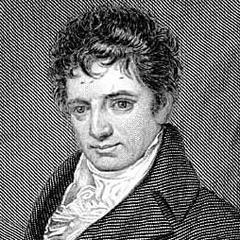
Robert Fulton
Robert Fulton

Robert Fulton was an outstanding engineer known for his innovations in the field of steamboats. Born on November 14, 1765, and passing away on February 24, 1815, Fulton played a crucial role in the invention and promotion of the steamboat, which had a profound impact on transportation and the Industrial Revolution. more

You May Also Like

“Characteristically skeptical of the idea that living things would faithfully follow mathematical formulas, [Robert Harper] seized upon factors in corn which seemed to blend in the hybrid-rather than be represented by plus or minus signs, and put several seasons into throwing doubt upon the concept of immutable hypothetical units of inheritance concocted to account for selected results.”

“Chemistry has the same quickening and suggestive influence upon the algebraist as a visit to the Royal Academy, or the old masters may be supposed to have on a Browning or a Tennyson. Indeed it seems to me that an exact homology exists between painting and poetry on the one hand and modem chemistry and modem algebra on the other. In poetry and algebra we have the pure idea elaborated and expressed through the vehicle of language, in painting and chemistry the idea enveloped in matter, depending in part on manual processes and the resources of art for its due manifestation.”

“On May 15, 1957 Linus Pauling made an extraordinary speech to the students of Washington University. ... It was at this time that the idea of the scientists' petition against nuclear weapons tests was born. That evening we discussed it at length after dinner at my house and various ones of those present were scribbling and suggesting paragraphs. But it was Linus Pauling himself who contributed the simple prose of the petition that was much superior to any of the suggestions we were making.”