“It is to be emphasized that no matter how many [amplitude] arrows we draw, add, or multiply, our objective is to calculate a single final arrow for the event . Mistakes are often made by physics students at first because they do not keep this important point in mind. They work for so long analyzing events involving a single photon that they begin to think that the arrow is somehow associated with the photon [rather than with the event].”
Quote by Richard P. Feynman
Work
QED: The Strange Theory of Light and Matter
Richard Feynman's QED: The Strange Theory of Light and Matter offers an accessible introduction to quantum electrodynamics, a complex and revolutionary theory in physics. The book is known for its engaging and conversational style, making the intricate concepts of quantum mechanics and the nature of light and matter understandable to a general audience. more
Author
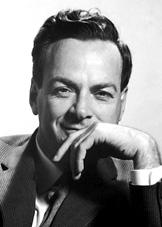
Richard P. Feynman
Richard P. Feynman was a renowned theoretical physicist known for his contributions to quantum mechanics and quantum electrodynamics. He was also an exceptional physicist in the field of physics education, with popular science books like 'Surely You're Joking, Mr. Feynman!' that have won the hearts of readers. more
You May Also Like
Source: The Quotable Feynman
“A wife is the earth itself, changing hands, bearing scars.”
Source: The Poisonwood Bible
“I always liked people who are older. Of course, every year it gets harder to find them.”
“The second I learned to read in first grade, when I was 5, I preferred it to life. And I still do.”