Quotessence
Home / Quotes / Quote by Charles Dickens

Quote by Charles Dickens

“Of all the ruinous and desolate places my uncle had ever beheld, this was the most so. It looked as if it had once been a large house of entertainment; but the roof had fallen in, in many places, and the stairs were steep, rugged, and broken. There was a huge fire-place in the room into which they walked, and the chimney was blackened with smoke; but no warm blaze lighted it up now. The white feathery dust of burnt wood was still strewed over the hearth, but the stove was cold, and all was dark and gloomy.”

Quote by Charles Dickens

Work

The posthumous papers of the Pickwick Club

This book is a compilation of the original serialized installments of Charles Dickens' popular novel, chronicling the escapades and misadventures of a group of friends who form the Pickwick Club. The narrative is known for its humorous and satirical portrayal of 19th-century English society. more

Author
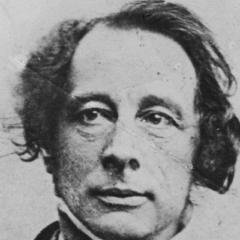
Charles Dickens
Charles Dickens

Charles Dickens, a British writer born on February 7, 1812, and died on June 9, 1870, is one of the greatest novelists of the 19th century. Known for his profound social criticism and vivid narrative style, Dickens' works extensively cover social reality, revealing various issues in the British society of the time. more

You May Also Like

“It was a very aged, ghostly place; the church had been built many hundreds of years ago, and had once had a convent or monastery attached; for arches in ruins, remains of oriel windows, and fragments of blackened walls, were yet standing-, while other portions of the old building, which had crumbled away and fallen down, were mingled with the churchyard earth and overgrown with grass, as if they too claimed a burying-place and sought to mix their ashes with the dust of men.”

“Under none of the accredited ghostly circumstances, and environed by none of the conventional ghostly surroundings, did I first make acquaintance with the house which is the subject of this Christmas piece. I saw it in the daylight, with the sun upon it. There was no wind, no rain, no lightning, no thunder, no awful or unwonted circumstance, of any kind, to heighten its effect.”

“They whirled past the dark trees, as feathers would be swept before a hurricane. Houses, gates, churches, hay-stacks, objects of every kind they shot by, with a velocity and noise like roaring waters suddenly let loose. Still the noise of pursuit grew louder, and still my uncle could hear the young lady wildly screaming, "Faster! Faster!"”

“As the gloom and shadow thickened behind him, in that place where it had been gathering so darkly, it took, by slow degrees, - or out of it there came, by some unreal, unsubstantial process - not to be traced by any human sense, - an awful likeness of himself!”

“The first diabolical character who intruded himself on my peaceful youth (as I called to mind that day at Dullborough), was a certain Captain Murderer. This wretch must have been an off-shoot of the Blue Beard family, but I had no suspicion of the consanguinity in those times. His warning name would seem to have awakened no general prejudice against him, for he was admitted into the best society and possessed immense wealth. Captain Murderer's mission was matrimony, and the gratification of a cannibal appetite with tender brides.”

“The young woman who brought me acquainted with Captain Murderer had a fiendish enjoyment of my terrors, and used to begin, I remember - as a sort of introductory overture - by clawing the air with both hands, and uttering a long low hollow groan. So acutely did I suffer from this ceremony in combination with this infernal Captain, that I sometimes used to plead I thought I was hardly strong enough and old enough to hear the story again just yet.”

“The night was dark, and a cold wind blew, driving the clouds, furiously and fast, before it. There was one black, gloomy mass that seemed to follow him: not hurrying in the wild chase with the others, but lingering sullenly behind, and gliding darkly and stealthily on. He often looked back at this, and, more than once, stopped to let it pass over; but, somehow, when he went forward again, it was still behind him, coming mournfully and slowly up, like a shadowy funeral train.”