“There is yet a silent agony in which the mind appears to disdain all external help, and broods over its distresses with gloomy reserve. This is the most dangerous state of mind; accidents or friendships may lessen the louder kinds of grief, but all remedies for this must be had from within, and there despair too often finds the most deadly enemy.”
Quote by Oliver Goldsmith
Work
The Works of Oliver Goldsmith
This compilation gathers a variety of Oliver Goldsmith's literary contributions, showcasing his talents in prose and poetry. It includes his renowned novel 'The Vicar of Wakefield', which explores themes of family and virtue, and the satirical play 'She Stoops to Conquer', celebrated for its wit and social commentary. The collection also features his shorter works, letters, and other writings, offering a comprehensive view of Goldsmith's literary legacy. more
Author
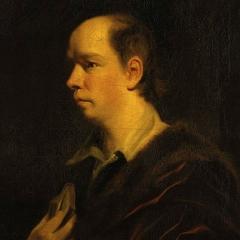
Oliver Goldsmith
Oliver Goldsmith was an Irish novelist, playwright, poet, and physician. He is best known for his novel 'The Vicar of Wakefield' and his plays 'She Stoops to Conquer' and 'The Good-Natur'd Man'. Goldsmith's works are characterized by their wit, humor, and moral depth. more
You May Also Like
Source: Miscellaneous Works of Oliver Goldsmith: With a New Life of the Author
Source: A History of the Earth and Animated Nature: Illus. with 85 Copperplates
Source: The miscellaneous works of Oliver Goldsmith, M.B.: with a biographical memoir of the author, written expressly for this edition
“Novels teach the youthful mind to sigh after happiness that never existed.”
Source: Miscellaneous Works Including a Variety of Pieces Now First Collected by James Prior
“All that philosophy can teach is to be stubborn or sullen under misfortunes.”
Source: The Works of Oliver Goldsmith, M.B.: With a Life and Notes
Source: His Works
Source: An inquiry into the present state of polite learning. The Bee. History of Cyrillo Padovano. Life of Dr. Parnell. Life of Lord Bolingbroke. Prefaces and introductions
“To be poor, and to seem poor, is a certain method never to rise.”
Source: Essays
Source: The Miscellaneous Works of Oliver Goldsmith, M.B.