Quotessence
Home / Quotes / Quote by Friedrich August von Hayek

Quote by Friedrich August von Hayek

“To live and work successfully with others requires more than faithfulness to one's concrete aims. It requires an intellectual commitment to a type of order in which, even on issues which to one are fundamental, others are allowed to pursue different ends. It is for this reason that to the liberal neither moral nor religious ideals are proper objects of coercion, while both conservatives and socialists recognize no such limits.”

Quote by Friedrich August von Hayek

Author
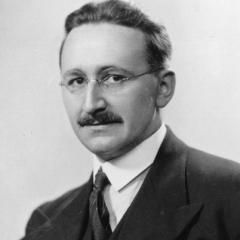
Friedrich August von Hayek

Friedrich August von Hayek, born on May 8, 1899, in Austria, and died on March 23, 1992, in the United Kingdom, was one of the most distinguished economists of the 20th century. He is renowned for his profound insights into the free market economy and his critical views on socialism. more

You May Also Like

“Even when men approve of the same arrangements, it must be asked whether they approve of them because they exist or because they are desirable in themselves. The common resistance to the collectivist tide should not be allowed to obscure the fact that the belief in integral freedom is based on an essentially forward-looking attitude and not on any nostalgic longing for the past or a romantic admiration for what has been.”

“The conservatives have already accepted a large part of the collectivist creed-a creed that has governed policy for so long that many of its institutions have come to be accepted as a matter of course and have become a source of pride to "conservative" parties who created them. Here the believer in freedom cannot but conflict with the conservative and take an essentially radical position, directed against popular prejudices, entrenched positions, and firmly established privileges. Follies and abuses are no better for having long been established principles of folly.”

“The confidence in the unlimited power of science is only too often based on a false belief that the scientific method consists in the application of a ready-made technique, or in imitating the form rather than the substance of scientific procedure, as if one needed only to follow some cooking recipes to solve all social problems. It sometimes almost seems as if the techniques of science were more easily learnt than the thinking that shows us what the problems are and how to approach them.”

“The chief point we must remember is that the great and rapid advance of the physical sciences took place in fields where it proved that explanation and prediction could be based on laws which accounted for the observed phenomena as functions of comparatively few variables - either particular facts or relative frequencies of events.”