Quotessence
Home / Quotes / Quote by Salman Rushdie

Quote by Salman Rushdie

Author

Salman Rushdie
Salman Rushdie

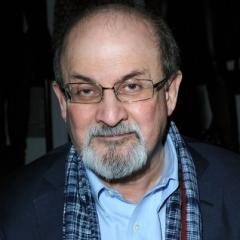
Salman Rushdie (born June 19, 1947) is a British-Indian novelist and essayist. Known for his magical realism style, his novel Midnight's Children won the Booker Prize in 1981. His works often explore themes of cultural conflict, religion, and politics. In 1988, his novel The Satanic Verses sparked global controversy, leading to a fatwa issued by Iran's Ayatollah Khomeini calling for his assassination. Rushdie spent years in hiding under police protection. He remains a prominent voice in contemporary English literature, celebrated for his literary innovation and defense of free expression. more

You May Also Like

“My book is going to be called Against Empathy, which may give you a feeling for where my argument is going to go. Whenever I talk about this, I have to begin in the most boring of all possible ways: by defining my terms. By "empathy," some people mean everything that is good - compassion, kindness, warmth, love, being a mensch, changing the world - and I'm for all of those things. I'm not a monster.”

“When people want to inspire you to turn against some group of people, they'll often use empathy. When Obama wanted to bomb Syria, he drew our attention to the victims of chemical warfare. And in both of the Iraq wars, politicians said, "Look at the horrific things that are happening." I'm not a pacifist. I think the suffering of innocent people can be a catalyst for moral action. But empathy puts too much weight on the scale in favor of war. Empathy can really lead to violence.”

“I like a lot of hardcore, but it's just a genre about which I don't have much to say. It's kind of a thing where, unless you're active in the hardcore community, what could you have to say of value about it? It resists criticism because it's not just a style but an entrance into several different worlds of ideas- political, philosophical, societal. The music is really only part of the whole scene. In that sense, the music doesn't change much because it shouldn't: It needs to be there as a signal that you're entering into a certain discursive mode, maybe.”