Quotessence
Home / Quotes / Quote by Francis of Assisi

Quote by Francis of Assisi

Author

Francis of Assisi
Francis of Assisi

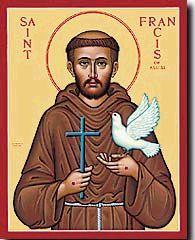
St. Francis of Assisi was an Italian Catholic saint who lived from June 24, 1182, to October 3, 1226. He is considered a reformer of the Catholic Church, known for his emphasis on poverty and simplicity of life. more

You May Also Like

“In many shamanic societies, if you came to a medicine person complaining of being disheartened, dispirited, or depressed, they would ask one of four questions: 'When did you stop dancing? When did you stop singing? When did you stop being enchanted by stories? When did you stop being comforted by the sweet territory of silence?'”

“Enlightenment is like witnessing the brilliant sun for the first time in the morning. It is like seeing the beautiful flowers that grow in the woods , the frolicking deer, a bird flying proudly, or fish swimming. Life is not all that grim. In the morning when you brush your teeth, you can see how shiny they are. Reality has its own gallantry, spark, and arrogance. You can study life while you are alive. You can study how you can achieve the brilliance of life.”

“We are all here on this planet, as it were, as tourists. None of us can live here forever. The longest we might live is a hundred years. So while we are here we should try to have a good heart and to make something positive and useful of our lives. Whether we live just a few years or a whole century, it would be truly regrettable and sad if we were to spend that time aggravating the problems that afflict other people, animals, and the environment. The most important things is to be a good human being.”

“Obviously, despite hard work and heroic efforts, many dreams don't come true. But if we don't dare to dream and then throw muscle, heart, and soul into making the dream come true, then WoW Projects-and all of the emotional, intellectual, spiritual, and financial riches that they bring will surely NOT be our lot in life!”

“The question for each man to settle is not what he would do if he had means, time, influence and educational advantages; the question is what he will do with the things he has. The moment a young man ceases to dream or to bemoan his lack of opportunities and resolutely looks his conditions in the face, and resolves to change them, he lays the corner-stone of a solid and honorable success.”