“And Botany I rank with the most valuable sciences, whether we consider its subjects as furnishing the principal subsistence of life to man and beast, delicious varieties for our tables, refreshments from our orchards, the adornments of our flower-borders, shade and perfume of our groves, materials for our buildings, or medicaments for our bodies.”
Quote by Thomas Jefferson
Work
The writings of Thomas Jefferson: being his autobiography, correspondence, reports, messages, addresses, and other writings, official and private : published by the order of the Joint Committee of Congress on the Library, from the original manuscripts, deposited in the Department of State
The writings of Thomas Jefferson is a compilation of his extensive correspondence, official documents, personal letters, and other written works. It provides a detailed insight into Jefferson's political career, his vision for the new nation, and his personal beliefs. The book is a testament to his intellectual contributions and his role in shaping American history. more
Author
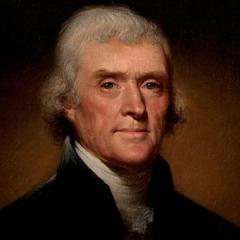
Thomas Jefferson
Thomas Jefferson was the third President of the United States, a distinguished politician, philosopher, architect, and scientist. He was born on April 13, 1743, and died on July 4, 1826. Jefferson advocated for democracy and freedom in politics and was one of the main authors of the Declaration of Independence. His political ideas had a profound impact on the founding and development of the United States. more
You May Also Like
Source: The Writings of Thomas Jefferson: Correspondence, contin
Source: The writings of Thomas Jefferson: being his autobiography, correspondence, reports, messages, addresses, and other writings, official and private
Source: The Works of Thomas Jefferson: Correspondence and Papers, 1816-1826
Source: The Writings of Thomas Jefferson: Correspondence, cont
Source: The Papers of Thomas Jefferson: 1 October 1814 to 31 August 1815
“Say nothing of my religion. It is known to God and myself alone.”
Source: Memoir, Correspondence, and Miscellanies: From the Papers of Thomas Jefferson
“We are protecting civilians. We are unarmed. We are no threat to you. Please do not shoot.”