Quotessence
Home / Quotes / Quote by Dogen

Quote by Dogen

“Through one word, or seven words, or three times five, even if you investigate thoroughly myriad forms, nothing can be depended upon. Night advances, the moon glows and falls into the ocean. The black dragon jewel you have been searching for, is everywhere.”

Quote by Dogen

Author
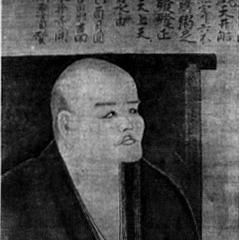
Dogen
Dogen

Dogen was a Japanese Zen master born in January 1200 and died on September 22, 1253. He was the founder of the Rinzai school of Zen Buddhism in Japan and had a profound influence on the development of Zen Buddhism. Dogen advocated 'Zen is life,' emphasizing the close connection between Zen practice and everyday life, and his thoughts had a wide impact on Japanese culture. more

You May Also Like

“God utters me like a word containing a partial thought of him. A word will never be able to comprehend the voice that utters it. But if I am true to the concept that God utters in me, if I am true to the thought of Him that I was meant to embody, I shall be full of his actuality and find him everywhere in myself, and find myself nowhere.”

“I strongly believe that nothing is more spiritual than living at our highest potential while serving others. I believe that the more closely aligned we are to "spirit" the more fully we will give ourselves in service to the world. As such, my "spiritual path" is the path that leads me to a more complete manifestation of my unique Bodhisattvic duties.”

“The Singularity denotes an event that will take place in the material world, the inevitable next step in the evolutionary process that started with biological evolution and has extended through human-directed technological evolution. however, it is precisely in the world of matter and energy that we encounter transcendence, a principal connotation of what people refer to as spirituality.”

“If the majority of the "spiritual market" is drawn to prerational magic and myth, how do you reach the small group who are involved in genuine, laborious, demanding, transrational spiritual practice? This is very difficult, because both markets are referred to as "spiritual," but these two camps really don't get along very well-one is mostly translative, the other is mostly transformative, and they generally disapprove of each other-so how do you put them into one magazine without alienating them both?”

“Would you who judge of the lawfulness or unlawfulness of pleasure, take this rule; whatever weakens your reason, impairs the tenderness of your conscience, obscures your sense of God, or takes off the relish of spiritual things; in short; whatever increases the strength and authority of your body over your mind, that is sin to you; however innocent it may be in itself.”