“From whence it is obvious to conclude that, since our Faculties are not fitted to penetrate into the internal Fabrick and real Essences of Bodies; but yet plainly discover to us the Being of a GOD, and the Knowledge of our selves, enough to lead us into a full and clear discovery of our Duty, and great Concernment, it will become us, as rational Creatures, to imploy those Faculties we have about what they are most adapted to, and follow the direction of Nature, where it seems to point us out the way.”
Quote by John Locke
Work
An Essay Concerning Humane Understanding (Complete)
This book is a seminal work in the field of philosophy, offering a detailed examination of the human mind and its capacity for understanding. Locke's essay delves into concepts such as perception, reason, and the formation of ideas, providing a foundational text for modern theories of knowledge and consciousness. more
Author
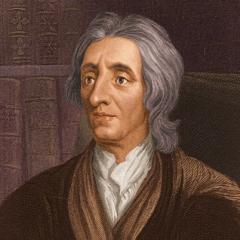
John Locke
John Locke (August 29, 1632 - October 28, 1704) was an English philosopher, political theorist, and physician, considered one of the most influential figures of the Enlightenment. His ideas have had a profound impact on political philosophy, ethics, and epistemology. more
You May Also Like
Source: The Notebooks of Samuel Butler
“Who never found what good from science grew, Save the grand truth, that one and one make two.”
Source: The Essential Samuel Butler
Source: The Notebooks of Samuel Butler